Inspirations & Experiences
Occupational Certificate: Artificial Intelligence Software Developer

- Description
- Curriculum
- Reviews
This comprehensive occupational qualification equips learners with the theoretical knowledge, practical skills, and workplace experience required to become an Artificial Intelligence (AI) Software Developer. The programme covers foundational topics such as mathematics, statistics, data analysis, computing theory, programming (with a focus on Python), and introduces AI, machine learning (ML), and deep learning (DL). Learners will gain hands-on experience in developing AI solutions, working with databases, implementing neural networks, and understanding ethical, legal, and governance frameworks relevant to AI. The qualification also includes structured work experience in AI solution design, testing, and deployment, preparing learners for industry-ready roles in the evolving field of AI software development.

-
1
 PURPOSE OF THE KNOWLEDGE MODULE
Module #
251201-002-00-KM-03
NQF Level
4
Notional hours
30
Credit(s)
3
Curriculum Code
251201002
Qualification Title
Occupational Certificate: Artificial Intelligence Software Developer
PURPOSE OF THE KNOWLEDGE MODULE
The main focus of the learning in this knowledge module is to provide the learner with an opportunity to acquire theory for formulating a problem and applying knowledge to design and create a solution for such a problem
TOPIC ELEMENTS TO BE COVERED INCLUDE:
v KM-03-KT01 : Introduction to analytical thinking
v KM-03-KT02 : Problem solving and critical thinking
v KM-03-KT03 : AI problem solving
-
2
SECTION 1: Introduction to AI
SECTION 1: KM-01-KT01: Introduction to AI
Learning Outcome
Topic elements to be covered include:
⦁ KT0101: Evolution of Artificial Intelligence (AI)
⦁ KT0102: Defining AI
⦁ KT0103: Realistic and unrealistic AI
⦁ KT0104: Fields related to AI:
⦁ Machine learning (ML)
⦁ Deep learning (DL)
⦁ Artificial Neural Networks (ANN)
⦁ Data science
⦁ Automation
⦁ Robotics
⦁ KT0105: Taxonomy of AI:
⦁ Philosophy of AI
⦁ General vs narrow AI
⦁ KT0106: Strong vs weak AI
⦁ KT0107: Why is AI important
⦁ Contribution of AI to society
⦁ Role players and stakeholders
⦁ The future of AI
⦁ KT0108: Limitation of AI -
3
KT0101: Evolution of Artificial Intelligence (AI)
-
4
KT0102: Defining AI
-
5
KT0103: Realistic and unrealistic AI
-
6
KT0104: Fields Related to AI
-
7
KT0105: Taxonomy of AI
-
8
KT0106: Strong vs weak AI
-
9
KT0107: Why is AI important
-
10
KT0108: Limitation of AI
-
11
SECTION 2: Background to AI
SECTION 2: KM-01-KT02: Background to AI
Learning Outcome
⦁ KT0201AI applications:
⦁ Common application types -
12
KT0201: AI applications
-
13
KT0202: AI making applications friendlier
-
14
SECTION 3: Strategic advantage of AI in business
SECTION 3: KM-01-KT03: Strategic advantage of AI in business
- Learning Outcome
- KT0301 Introduction to the 4th Industrial Revolution (4IR)
-
15
KT0301: Introduction to the 4th Industrial Revolution (4IR)
-
16
KT0302: 4IR vs AI
-
17
KT0303: Strategic advantage of AI in Business
-
18
KT0304: AI technology supporting business
-
19
KT0305: AI in production or manufacturing
-
20
KT0306: AI in the medical fields
-
21
KT0307: AI in agriculture
-
22
PURPOSE OF THE KNOWLEDGE MODULE
Module #
251201-002-00-KM-02
NQF Level
4
Notional hours
100
Credit(s)
10
Curriculum Code
251201002
Qualification Title
Occupational Certificate: Artificial Intelligence Software Developer
PURPOSE OF THE KNOWLEDGE MODULE
The main focus of the learning in this knowledge module is to revise and acquire mathematical and statistical theory to successfully understand and interpret actions of Artificial Intelligence, Machine Learning, Deep Learning and Data Analytics
TOPIC ELEMENTS TO BE COVERED INCLUDE:
v KM-02-KT01: Basic Mathematics
v KM-02-KT02: Linear Algebra
v KM-02-KT03: Conversion between decimal and binary systems
v KM-02-KT04: Expressing size and magnitude
v KM-02-KT05: Error in calculations
v KM-02-KT06: Cartesian coordinate system
v KM-02-KT07: Pythagorean theorem
v KM-02-KT08: Increments
v KM-02-KT09: Calculus
v KM-02-KT10: Probabilities
v KM-02-KT11: Statistics
v KM-02-KT12: Bayes’ Theorem
-
23
SECTION 1 : Basic Mathematics
Learning Outcome
v KT0101Operator precedence:
§ Definition and terminology
§ Purpose and use
§ Order of operations (left to right)
§ Apply precedence – PEMDAS (BOMDAS)
§ Parentheses (Brackets)
§ Exponents (Order)
§ Multiply and divide
§ Add and subtract
§ Use of PEMDAS (BOMDAS)
v KT0102Integer division:
§ Definition and terminology
§ Purpose and use
§ Rules on how to divide integers
§ Names and symbols for integer division
§ Software for integer division
v KT0103Modulus:
§ Definition and terminology
§ Purpose and use of modulus
§ Modulus abbreviated as “mod”% application(==) application
§ Modulus in programming
v KT0104Mixing Types:
§ Definition and terminology
§ Purpose and use of mixing types
§ Apply an operator
§ Combination with the order of operations
§ The order in which an expression is written
§ How a computer would evaluate some expressions that combine types
§ Casting
Learning Outcome
v KT0101Operator precedence:
§ Definition and terminology
§ Purpose and use
§ Order of operations (left to right)
§ Apply precedence – PEMDAS (BOMDAS)
§ Parentheses (Brackets)
§ Exponents (Order)
§ Multiply and divide
§ Add and subtract
§ Use of PEMDAS (BOMDAS)
v KT0102Integer division:
§ Definition and terminology
§ Purpose and use
§ Rules on how to divide integers
§ Names and symbols for integer division
§ Software for integer division
v KT0103Modulus:
§ Definition and terminology
§ Purpose and use of modulus
§ Modulus abbreviated as “mod”% application(==) application
§ Modulus in programming
v KT0104Mixing Types:
§ Definition and terminology
§ Purpose and use of mixing types
§ Apply an operator
§ Combination with the order of operations
§ The order in which an expression is written
§ How a computer would evaluate some expressions that combine types
§ Casting
-
24
KT0101: Operator precedence:
-
25
KT0101: Operator precedence
-
26
KT0102: Integer division
-
27
KT0103: Modulus
-
28
KT0104: Mixing Types
-
29
SECTION 2: Linear Algebra
Learning Outcome
v KT0201 Linear transformation
v KT0202 Vectors:
• Vectors
• Customary behavioural vectors
• Eigen vectors
v KT0203 Matrices:
• Matrices
• Inverse and transports
• Special matrices
v KT0204 Matrix operations
v KT0205 Special functions in linear algebra:
• ReLU
• Sigmoid
• SoftMax
• Popular loss functions
• Cross-entropy
• Quadratic loss functions
-
30
KT0201: Linear transformation
-
31
KT0204: Matrix operations
-
32
KT0205: Special functions in linear algebra
-
33
-
34
KT0301: Introduction to binary numbers
-
35
KT0302: Perform addition and subtraction of positive whole numbers in binary
-
36
KT0303: Binary arithmetic
-
37
-
38
KT0401: Use scientific notation for small and large numbers
-
39
KT0402: Prefixes
-
40
SECTION 5: Error in calculations
-
41
KT0501: Rational and irrational numbers
-
42
KT0502 Explore repeating decimals and convert them to fraction
-
43
KT0503: Symbols for irrational numbers
-
44
KT0504: Rounding prematurely in calculations
-
45
KT0505: Accuracy in calculations
-
46
KT0506: Final value of a calculation expressed in terms of the required unit
-
47
KT0507: When PEMDAS fail
-
48
SECTION 6: Cartesian coordinate system
SECTION 6: KM-02-KT06: Cartesian coordinate system
Learning Outcome
v KT0601 Definition
v KT0602 Terminology
v KT0603 The coordinate plane:
§ Intersecting x- and y-axes
§ Four quadrants
v KT0604 Naming using Roman numerals
v KT0605 Use an application to create graphs and maps
-
49
KT0601: Definition
-
50
KT0602: Terminology
-
51
KT0603: The coordinate plane:
-
52
KT0604: Naming using Roman numerals
-
53
KT0605: Use an application to create graphs and maps
-
54
SECTION 7: Pythagorean theorem
SECTION 7: KM-02-KT07:Pythagorean theorem
Learning Outcome
v KT0701 What is a theorem?
v KT0702 Definition of Pythagorean theorem
v KT0703 Finding the distance between two points
v KT0704 Terminology
v KT0705 Purpose
v KT0706 Determine the distance between two points on the Cartesian grid
-
55
KT0701: What is a theorem?
-
56
KT0702: Definition of Pythagorean theorem
-
57
KT0703: Finding the distance between two points
-
58
KT0704: Terminology
-
59
KT0705: Purpose
-
60
KT0706: Determine the distance between two points on the Cartesian grid
-
61
SECTION 8: Increments
SECTION 8: KM-02-KT08:Increments
Learning Outcome
v KT0801 Definition and terminology
v KT0802 Purpose and use of increments
v KT0803 Increment a variable
v KT0804 Compound assignment operator
v KT0805 Increments in programming
-
62
KT0801: Definition and terminology
-
63
KT0802: Purpose and use of increments
-
64
KT0803: Increment a variable
-
65
KT0804: Compound assignment operator
-
66
KT0805: Increments in programming
-
67
SECTION 9: Calculus
SECTION 9: KM-02-KT09: Calculus
Learning Outcome
-
KT0901 Calculus essentials:
-
Differential calculus
-
Integral calculus
-
KT0902 Derivatives:
-
Derivative and partial derivatives
-
Chain rule
-
Derivatives of special functions
-
-
68
KT0901: Calculus essentials
-
69
KT0902: Derivatives
-
70
SECTION 10: Probabilities
SECTION 10: KM-02-KT10: Probabilities
Learning Outcome
-
KT1001 Definition and terminology
-
KT1002 Probability essentials
-
KT1003 Probability basics and notations
-
KT1004 Probabilities and odds
-
KT1005 Probability:
-
Why probability matters
-
Odds
-
KT1006 The Bayes rule:
-
Essential probability theorem
-
How odds change
-
Bayes rule in practice
-
Naïve Bayes classification
-
KT1007 What are parameters
-
KT1008 Estimating parameters
-
KT1009 Conditional probability
-
KT1010 Essential probability theorems for ML
-
-
71
KT1001: Definition and terminology
-
72
KT1002: Probability essentials
-
73
KT1003: Probability basics and notations
-
74
KT1004: Probabilities and odds
-
75
KT1005: Probability
-
76
KT1006: The Bayes rule
-
77
KT1007: What are parameters
KT1007 What are parameters
A parameter is a quantity that influences the output or behavior of a mathematical object but is viewed as being held constant. Parameters are closely related to variables, and the difference is sometimes just a matter of perspective.
To find the perimeter of a rectangle or square you have to add the lengths of all the four sides. x is in this case the length of the rectangle while y is the width of the rectangle. The area is measurement of the surface of a shape.
Calculating the area and the perimeter
The perimeter is the length of the outline of a shape. To find the perimeter of a rectangle or square you have to add the lengths of all the four sides. x is in this case the length of the rectangle while y is the width of the rectangle.
The perimeter, P, is:
P=x+x+y+yP=x+x+y+y
P=2x+2yP=2x+2y
P=2(x+y)P=2(x+y)

Example
Find the perimeter of this rectangle:

P=7+7+4+4P=7+7+4+4
P=2⋅7+2⋅4P=2⋅7+2⋅4
P=2⋅(7+4)P=2⋅(7+4)
P=2⋅11P=2⋅11
P=22inP=22in
The area is measurement of the surface of a shape. To find the area of a rectangle or a square you need to multiply the length and the width of a rectangle or a square.

Area, A, is x times y.
A=x⋅yA=x⋅y
Example
Find the area of this square.

A=x⋅yA=x⋅y
A=5⋅5A=5⋅5
A=25in2A=25in2
There are different units for perimeter and area The perimeter has the same units as the length of the sides of rectangle or square whereas the area's unit is squared.
-
KT1008 Estimating parameters
Parameter estimation is defined as the experimental determination of values of parameters that govern the system behavior, assuming that the structure of the process is known.
What is estimating parameters in statistics?
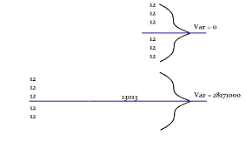
Parameter Estimation is a branch of statistics that involves using sample data to estimate the parameters of a distribution.
What is a parameter estimate (also called a sample statistic)?
Parameters are descriptive measures of an entire population. However, their values are usually unknown because it is infeasible to measure an entire population. Because of this, you can take a random sample from the population to obtain parameter estimates. One goal of statistical analyses is to obtain estimates of the population parameters along with the amount of error associated with these estimates. These estimates are also known as sample statistics.
There are several types of parameter estimates:
-
Point estimates are the single, most likely value of a parameter. For example, the point estimate of population mean (the parameter) is the sample mean (the parameter estimate).
-
Confidence intervals are a range of values likely to contain the population parameter.
For an example of parameter estimates, suppose you work for a spark plug manufacturer that is studying a problem in their spark plug gap. It would be too costly to measure every single spark plug that is made. Instead, you randomly sample 100 spark plugs and measure the gap in millimeters. The mean of the sample is 9.2. This is the point estimate for the population mean (μ), and it informs you that the most likely value for the average gap for all spark plugs is 9.2 You also create a 95% confidence interval for μ which is (8.8, 9.6). This means that you can be 95% confident that the true value of the average gap for all the spark plugs is between 8.8 and 9.6.
-
KT1009 Conditional probability
Conditional probability: p(A|B) is the probability of event A occurring, given that event B occurs. For example, given that you drew a red card, what's the probability that it's a four (p(four|red))=2/26=1/13. So out of the 26 red cards (given a red card), there are two fours so 2/26=1/13.
How do you explain conditional probability?
The conditional probability of an event B is the probability that the event will occur given the knowledge that an event A has already occurred. This probability is written P(B|A), notation for the probability of B given A.
What is the formula for conditional probability?
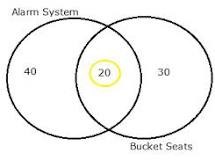
The formula for conditional probability is derived from the probability multiplication rule, P(A and B) = P(A)*P(B|A). You may also see this rule as P(A∪B). The Union symbol (∪) means “and”, as in event A happening and event B happening.
-
KT1010 Essential probability theorems for ML
Definition
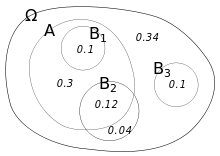
Illustration of conditional probabilities with an Euler diagram. The unconditional probability P(A) = 0.30 + 0.10 + 0.12 = 0.52. However, the conditional probability P(A|B1) = 1, P(A|B2) = 0.12 ÷ (0.12 + 0.04) = 0.75, and P(A|B3) = 0.
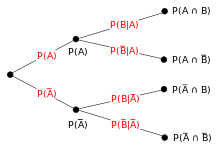
On a tree diagram, branch probabilities are conditional on the event associated with the parent node. (Here, the overbars indicate that the event does not occur.)
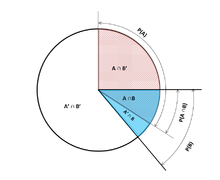
Venn Pie Chart describing conditional probabilities
Conditioning on an event
Kolmogorov definition
Given two events A and B from the sigma-field of a probability space, with the unconditional probability of B being greater than zero (i.e., P(B) > 0), the conditional probability of A given B ({displaystyle P(Amid B)}
 ) is the probability of A occurring if B has or is assumed to have happened. A is assumed to a set of all possible outcomes of an experiment or random trial that has a restricted or reduced sample space. The conditional probability can be found by the quotient of the probability of the joint intersection of events A and B ({displaystyle P(Acap B)}) -- the probability at which A and B occur together, although not necessarily occurring at the same time-- and the probability of B:
{displaystyle P(Amid B)={frac {P(Acap B)}{P(B)}}}
The probability of an event can be calculated directly by counting all the occurrences of the event and dividing them by the total possible outcomes of the event. Probability is a fractional value and has a value in the range between 0 and 1, where 0 indicates no probability and 1 represents full probability.
What math do you need for ML?
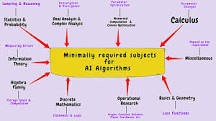
Machine learning is powered by four critical concepts and is Statistics, Linear Algebra, Probability, and Calculus. While statistical concepts are the core part of every model, calculus helps us learn and optimize a model.
Internal Assessment Criteria and Weight
• IAC1001 The definition of probabilities is understood and the applications thereof described
• IAC1002The basic Bayes rule is understood and described
SECTION 11: KM-02-KT11: Statistics
Learning Outcome
-
KT1101 Why is statistics important in AI?
-
KT1102 Introduction to statistics:
-
Descriptive statistics
-
Inferential statistics
-
KT1103 Qualitative and quantitative research:
-
Definitions
-
Application
-
KT1104 Statistics and machine learning:
-
Statistics in data preparation
-
Outlier detection
-
Missing value imputation
-
Data sampling
-
Data scaling
-
Variable encoding
-
Statistics in model evaluation
-
Data sampling
-
Data resampling
-
Experimental design
-
Statistics in model selection
-
Checking for a significant difference between results
-
Quantifying the size of the difference between results
-
Statistics in model prediction
-
Summarizing the expected skill of the model on average
-
Quantifying the expected variability of the skill of the model in practice
-
Statistics in model presentation
-
Quantifying the expected variability for the prediction
-
KT1105 Gaussian distribution and descriptive statistics:
-
Mean
-
Variance
-
Standard deviation
-
KT1106 Correlation between variables:
-
Positive correlation
-
Neutral correlation
-
Negative correlation
-
KT1107 Statistical Hypothesis Tests:
-
Hypothesis 0 (H0)
-
Hypothesis 1 (H1)
-
KT1108 Estimation statistics:
-
Classes of methods
-
Effect size
-
Interval estimation
-
Meta-analysis
-
KT1109 Types of intervals:
-
Tolerance interval
-
Confidence interval
-
Prediction interval
-
KT1110 Nonparametric statistics
-
KT1101 Why is statistics important in AI?
How do statistics play a role in the field of AI? Statistics serve as a foundation for analysis and dealing with data in data science. A lot of performance metrics used in machine learning algorithms like accuracy, precision, recall, f-score, root mean squared error, etc. use statistics as the base.
What is statistics in Artificial Intelligence?
Statistics is a collection of tools that you can use to get answers to important questions about data. You can use descriptive statistical methods to transform raw observations into information that you can understand and share.
Why is statistics important in machine learning?
Statistics is a core component of data analytics and machine learning. It helps you analyze and visualize data to find unseen patterns. If you are interested in machine learning and want to grow your career in it, then learning statistics along with programming should be the first step.
Do you need statistics for AI?
Statistics & Probability Concepts You Need to Know for AI
Basic Statistics — Mean, median, mode, variance, covariance, and so on. Basic rules in probability — events (dependent and independent), sample spaces, conditional probability.-
KT1102 Introduction to statistics:
-
Descriptive statistics
-
Inferential statistics
What Are Descriptive Statistics?
Descriptive statistics are brief descriptive coefficients that summarize a given data set, which can be either a representation of the entire population or a sample of a population. Descriptive statistics are broken down into measures of central tendency and measures of variability (spread). Measures of central tendency include the mean, median, and mode, while measures of variability include standard deviation, variance, minimum and maximum variables, kurtosis, and skewness.
What is Inferential Statistics?
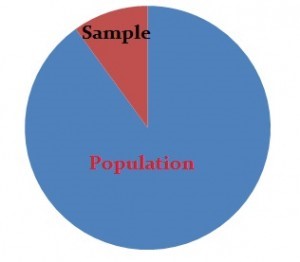
Descriptive statistics describes data (for example, a chart or graph) and inferential statistics allows you to make predictions (“inferences”) from that data. With inferential statistics, you take data from samples and make generalizations about a population.
For example, you might stand in a mall and ask a sample of 100 people if they like shopping at Sears. You could make a bar chart of yes or no answers (that would be descriptive statistics) or you could use your research (and inferential statistics) to reason that around 75-80% of the population (all shoppers in all malls) like shopping at Sears.
-
KT1103 Qualitative and quantitative research:
-
Definitions
-
Application
Qualitative research
Qualitative research relies on data obtained by the researcher from first-hand observation, interviews, questionnaires (on which participants write descriptively), focus groups, participant-observation, recordings made in natural settings, documents, and artifacts. The data are generally nonnumerical. Qualitative methods include ethnography, grounded theory, discourse analysis, and interpretative phenomenological analysis.[1] Qualitative research methods have been used in sociology, anthropology, political science, psychology, social work, and educational research.[2][3] Qualitative researchers study individuals' understanding of their social reality.
Quantitative research.

Quantitative research is a research strategy that focuses on quantifying the collection and analysis of data.[1] It is formed from a deductive approach where emphasis is placed on the testing of theory, shaped by empiricist and positivist philosophies.
Associated with the natural, applied, formal, and social sciences this research strategy promotes the objective empirical investigation of observable phenomena to test and understand relationships. This is done through a range of quantifying methods and techniques, reflecting on its broad utilization as a research strategy across differing academic disciplines.
The objective of quantitative research is to develop and employ mathematical models, theories, and hypotheses pertaining to phenomena. The process of measurement is central to quantitative research because it provides the fundamental connection between empirical observation and mathematical expression of quantitative relationships.
Quantitative data is any data that is in numerical form such as statistics, percentages, etc.[4] The researcher analyses the data with the help of statistics and hopes the numbers will yield an unbiased result that can be generalized to some larger population. Qualitative research, on the other hand, inquires deeply into specific experiences, with the intention of describing and exploring meaning through text, narrative, or visual-based data, by developing themes exclusive to that set of participants.
Quantitative research is widely used in psychology, economics, demography, sociology, marketing, community health, health & human development, gender studies, and political science; and less frequently in anthropology and history. Research in mathematical sciences, such as physics, is also "quantitative" by definition, though this use of the term differs in context. In the social sciences, the term relates to empirical methods originating in both philosophical positivism and the history of statistics, in contrast with qualitative research methods.
Qualitative research produces information only on the particular cases studied, and any more general conclusions are only hypotheses. Quantitative methods can be used to verify which of such hypotheses are true. A comprehensive analysis of 1274 articles published in the top two American sociology journals between 1935 and 2005 found that roughly two-thirds of these articles used quantitative method.
What is difference between qualitative and quantitative research?

Quantitative research deals with numbers and statistics, while qualitative research deals with words and meanings. Quantitative methods allow you to systematically measure variables and test hypotheses. Qualitative methods allow you to explore concepts and experiences in more detail.
-
KT1104 Statistics and machine learning:
-
Statistics in data preparation
-
Outlier detection
-
Missing value imputation
-
Data sampling
-
Data scaling
-
Variable encoding
-
Statistics in model evaluation
-
Data sampling
-
Data resampling
-
Experimental design
-
Statistics in model selection
-
Checking for a significant difference between results
-
Quantifying the size of the difference between results
-
Statistics in model prediction
-
Summarizing the expected skill of the model on average
-
Quantifying the expected variability of the skill of the model in practice
-
Statistics in model presentation
-
Quantifying the expected variability for the prediction
Statistics is a core component of data analytics and machine learning. It helps you analyze and visualize data to find unseen patterns. If you are interested in machine learning and want to grow your career in it, then learning statistics along with programming should be the first step.
What is machine learning and how statistics is used in machine learning?
Machine Learning is an algorithm that can learn from data without relying on rules-based programming. Statistical modeling is a formalization of relationships between variables in the data in the form of mathematical equations.
The difference between machine learning and statistics has been the subject of long-running debate. A debate so contentious at times, that it has even become the subject of memes.
Some say that machine learning is just glorified statistics, rebranded for the age of big data and faster computing. Others say that they’re completely unrelated, so much so that you don’t even need to understand statistics to perform machine learning tasks.
So who’s right? As you can imagine, the reality falls somewhere between these two extremes.
The goal of this blog is to:
-
Define statistics and machine learning.
-
Explain how each discipline related to the other.
What is statistics?
The Department of Statistics at the University of California, Irvine defines the discipline as “the science concerned with developing and studying methods for collecting, analyzing, interpreting and presenting empirical data.”
Statistics has been studied and used for more than a thousand years, with the first writings on the subject dating back to the 8th century. There are two main statistical methods: descriptive statistics and inferential statistics.
Descriptive statistics is the process of summarizing information about a sample using metrics like mean, median, mode, standard deviation, etc. This is sometimes used for exploratory data analysis leading to a larger project, or descriptive statistics may be the extent of the investigation.
Inferential statistics is the process of inferring properties on a population based on the properties of a sample of a population.
What is machine learning?
Machine learning is a subset of artificial intelligence. It is the process of computers using large amounts of data to find patterns and make decisions without human intervention. Machine learning is used for tasks like text mining and sentiment analysis.
There are three methods of machine learning: supervised learning, unsupervised learning, and reinforcement learning. In supervised learning there is a target outcome variable. In unsupervised learning, there is no target and the machine is simply finding patterns and relationships within the data. The process of reinforcement learning involves an algorithm using trial and error to reach an objective.
While not centuries old, machine learning is not new and has been researched extensively since the 1950s. It has come into prominence in the past two decades due to the exponential growth in data collection and increased computing power.
How are statistics and machine learning related?
Many machine learning techniques are drawn from statistics (e.g., linear regression and logistic regression), in addition to other disciplines like calculus, linear algebra, and computer science. But it is this association with underlying statistical techniques that causes many people to conflate the disciplines.
Interestingly, newer machine learning engineers and data scientists who use machine learning packages like scikit-learn in Python may be unaware of the underlying relationship between machine learning and statistics.
This abstraction of machine learning from statistics with the use of libraries is often why some individuals make the argument that knowledge of statistics is not necessary to do machine learning. While this may be true for more basic tasks, experienced data scientists and machine learning engineers draw on their knowledge probability and statistics to develop models.
What are the key differences between statistics and machine learning?
Purpose
Statistics and machine learning often get lumped together because they use similar means to reach a goal. However, the goals that they are trying to achieve are very different. The purpose of statistics is to make an inference about a population based on a sample. Machine learning is used to make repeatable predictions by finding patterns within data.
Data
Machine learning requires large amounts of data in order to make accurate predictions. Models are built using training data, fine tuned using a validation dataset, and are evaluated with a test dataset. All of these steps help the machine “learn.”
Statistics does not involve multiple subsets of data because you are not trying to make a prediction. The point of modeling in this situation is to display the relationship between data and the outcome variable. In addition, statistics relies on significance tests to determine the direction and magnitude of a relationship, discounting noise and confounding variables.
Interpretability
Because of the large number of variables in machine learning datasets, the models developed from them can be simultaneously extremely accurate and almost impossible to understand. Statistical models, on the other hand are typically easier to understand because they are based on fewer variables, and the accuracy of relationships is supported by tests of statistical significance.
Is one more valuable than the other?
No. You really can’t place a value judgment on two disciplines that serve different purposes. The choice to develop a machine learning model or a statistical model will depend on your goal or industry.
One important factor to consider is interpretability, as mentioned earlier. A data scientist may not need to justify the decisions of a complicated model that gives recommendations about how many widgets to manufacture. However, a model meant to make more sensitive decisions (e.g., granting or denying a loan) may not be acceptable if a data scientist can’t prove the strength of relationships between the predictors and the outcome variable.
Where do data science and AI fit into the picture?
While we’ve mentioned both terms already in this piece, we think it’s important to explicitly define how data science and artificial intelligence (AI) fit into the statistics/machine learning debate.
Artificial intelligence is a branch of computer science focused on building machines capable of performing tasks typically done by humans. Machine learning is a subset of this field.
Data science is a multidisciplinary field that includes aspects of computer science, math, statistics, and machine learning to derive insights from large data sets. Data scientists work to solve problems or uncover opportunities using the vast amounts of data that companies and governments generate. They often draw upon their knowledge of statistics to aid them in developing models most appropriate for the task.
-
KT1105 Gaussian distribution and descriptive statistics:
-
Mean
-
Variance
-
Standard deviation
Descriptive statistics summarize and organize characteristics of a data set. A data set is a collection of responses or observations from a sample or entire population.
In quantitative research, after collecting data, the first step of statistical analysis is to describe characteristics of the responses, such as the average of one variable (e.g., age), or the relation between two variables (e.g., age and creativity).
The next step is inferential statistics, which help you decide whether your data confirms or refutes your hypothesis and whether it is generalizable to a larger population.
Descriptive statistics allow you to characterize your data based on its properties. There are four major types of descriptive statistics:
1. Measures of Frequency:
* Count, Percent, Frequency
* Shows how often something occurs
* Use this when you want to show how often a response is given
2. Measures of Central Tendency
* Mean, Median, and Mode
* Locates the distribution by various points
* Use this when you want to show how an average or most commonly indicated response
3. Measures of Dispersion or Variation
* Range, Variance, Standard Deviation
* Identifies the spread of scores by stating intervals
* Range = High/Low points
* Variance or Standard Deviation = difference between observed score and mean
* Use this when you want to show how "spread out" the data are. It is helpful to know when your data are so spread out that it affects the mean
4. Measures of Position
* Percentile Ranks, Quartile Ranks
* Describes how scores fall in relation to one another. Relies on standardized scores
* Use this when you need to compare scores to a normalized score (e.g., a national norm)
The normal distribution is one of the most important concepts in statistics since nearly all statistical tests require normally distributed data. It basically describes how large samples of data look like when they are plotted. It is sometimes called the “bell curve“ or the “Gaussian curve“.
What is special about Gaussian distribution?
Gaussian Distribution and its key characteristics:
Gaussian distribution is a continuous probability distribution with symmetrical sides around its center. Its mean, median and mode are equal. Its shape looks like below with most of the data points clustered around the mean with asymptotic tails.What is meant by Gaussian distribution?
What is Normal Distribution? Normal distribution, also known as the Gaussian distribution, is a probability distribution that is symmetric about the mean, showing that data near the mean are more frequent in occurrence than data far from the mean. In graph form, normal distribution will appear as a bell curve.
Why is it called a Gaussian distribution?
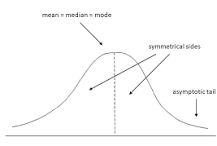
The normal distribution is often called the bell curve because the graph of its probability density looks like a bell. It is also known as called Gaussian distribution, after the German mathematician Carl Gauss who first described it.
-
KT1106 Correlation between variables:
-
Positive correlation
-
Neutral correlation
-
Negative correlation
The statistical relationship between two variables is referred to as their correlation. A correlation could be positive, meaning both variables move in the same direction, or negative, meaning that when one variable's value increases, the other variables' values decrease.
How do you find the correlation between two variables?
The correlation coefficient is determined by dividing the covariance by the product of the two variables' standard deviations. Standard deviation is a measure of the dispersion of data from its average. Covariance is a measure of how two variables change together.
What is an example of correlation between two variables?
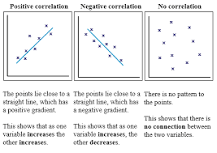
An example of positive correlation would be height and weight. Taller people tend to be heavier. A negative correlation is a relationship between two variables in which an increase in one variable is associated with a decrease in the other.
What are the 4 types of correlation?
Usually, in statistics, we measure four types of correlations: Pearson correlation, Kendall rank correlation, Spearman correlation, and the Point-Biserial correlation.
What is Karl Pearson coefficient of correlation?
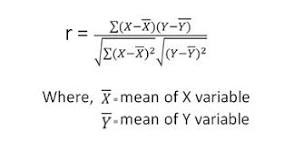
Karl Pearson's coefficient of correlation is defined as a linear correlation coefficient that falls in the value range of -1 to +1. Value of -1 signifies strong negative correlation while +1 indicates strong positive correlation.
-
KT1107 Statistical Hypothesis Tests:
Hypothesis testing is an act in statistics whereby an analyst tests an assumption regarding a population parameter. The methodology employed by the analyst depends on the nature of the data used and the reason for the analysis. Hypothesis testing is used to assess the plausibility of a hypothesis by using sample data.
What Is Hypothesis Testing?
Hypothesis testing is an act in statistics whereby an analyst tests an assumption regarding a population parameter. The methodology employed by the analyst depends on the nature of the data used and the reason for the analysis.
Hypothesis testing is used to assess the plausibility of a hypothesis by using sample data. Such data may come from a larger population, or from a data-generating process. The word "population" will be used for both of these cases in the following descriptions.
How Hypothesis Testing Works
In hypothesis testing, an analyst tests a statistical sample, with the goal of providing evidence on the plausibility of the null hypothesis.
Statistical analysts test a hypothesis by measuring and examining a random sample of the population being analyzed. All analysts use a random population sample to test two different hypotheses: the null hypothesis and the alternative hypothesis.
The null hypothesis is usually a hypothesis of equality between population parameters; e.g., a null hypothesis may state that the population mean return is equal to zero. The alternative hypothesis is effectively the opposite of a null hypothesis (e.g., the population mean return is not equal to zero). Thus, they are mutually exclusive, and only one can be true. However, one of the two hypotheses will always be true.
-
KT1108 Estimation statistics:
Estimation statistics, or simply estimation, is a data analysis framework that uses a combination of effect sizes, confidence intervals, precision planning, and meta-analysis to plan experiments, analyze data and interpret results.
-
KT1109 Types of intervals:
Prediction interval to contain all or most of these observations from a future sample. Confidence interval for the probability of being less than (or greater than) some specified value. Prediction interval to contain the proportion of observations in a future sample that exceed a specified limit.
What are interval in statistics?
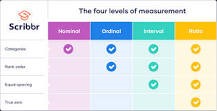
Interval data is measured along a numerical scale that has equal distances between adjacent values. These distances are called “intervals.” There is no true zero on an interval scale, which is what distinguishes it from a ratio scale.
What is interval data type?

Interval data, also called an integer, is defined as a data type which is measured along a scale, in which each point is placed at equal distance from one another. Interval data always appears in the form of numbers or numerical values where the distance between the two points is standardized and equal.
What are the examples of interval?
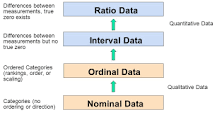
An interval scale is one where there is order and the difference between two values is meaningful. Examples of interval variables include: temperature (Farenheit), temperature (Celcius), pH, SAT score (200-800), credit score (300-850).
-
KT1110 Nonparametric statistics
Nonparametric statistics refers to a statistical method in which the data are not assumed to come from prescribed models that are determined by a small number of parameters; examples of such models include the normal distribution model and the linear regression model.
What are examples of nonparametric statistics?
An example of this type of data is age, income, height, and weight in which the values are continuous and the intervals between values have meaning. In contrast, nonparametric statistics are typically used on data that nominal or ordinal. Nominal variables are variables for which the values have not quantitative value.
Internal Assessment Criteria and Weight
-
IAC1101 The definition and importance of statistics are understood and described
-
IAC1102 The definition of qualitative and quantitative research is understood and the applications thereof described
-
IAC1103 The application of statistics in machine learning is understood and described
-
IAC1104 The application of statistics in preparation is understood and described
-
IAC1105 The application of statistics in model evaluation is understood and described
-
IAC1106 The application of statistics in model selection is understood and described
-
IAC1107 The application of statistics in model preparation is understood and described
-
IAC1108 Gaussian distribution and description statistics are understood and described
-
IAC1109 The correlation between variables is understood and described
-
IAC1110 Statistical hypothesis is understood and successfully used
-
IAC1111 Estimation statistics is understood and successfully used
-
IAC1112 Types of intervals are understood and described
-
IAC1113 Nonparametric statistics is understood and described
SECTION 12: KM-02-KT12:Bayes’ Theorem
Learning Outcome
-
KT1201 Bayes’ theorem:
-
Bayes’ Theorem of conditional probability
-
Naming the terms in the theorem
-
Example for calculating Bayes’ Theorem
-
Diagnostic test scenario
-
Manual calculation
-
Python code calculation
-
Binary classifier terminology
-
Bayes’ Theorem for modelling Hypotheses
-
Bayes’ Theorem for classification
-
Bayes’ Classifier
-
Bayes’ Optimal Classifier
-
More uses of Bayes’ Theorem in Machine Learning
-
Bayesian optimisation
-
Bayesian belief networks
-
KT1201 Bayes’ theorem:
-
Bayes’ Theorem of conditional probability
-
Naming the terms in the theorem
-
Example for calculating Bayes’ Theorem
-
Diagnostic test scenario
-
Manual calculation
-
Python code calculation
-
Binary classifier terminology
-
Bayes’ Theorem for modelling Hypotheses
-
Bayes’ Theorem for classification
-
Bayes’ Classifier
-
Bayes’ Optimal Classifier
-
More uses of Bayes’ Theorem in Machine Learning
-
Bayesian optimisation
-
Bayesian belief networks
Bayes' Theorem states that the conditional probability of an event, based on the occurrence of another event, is equal to the likelihood of the second event given the first event multiplied by the probability of the first event.
What is the term of theorem?
Definition of theorem
1 : a formula, proposition, or statement in mathematics or logic deduced or to be deduced from other formulas or propositions. 2 : an idea accepted or proposed as a demonstrable truth often as a part of a general theory : proposition the theorem that the best defense is offense.Can Python be used as a calculator?
Python can be used as a calculator to compute arithmetic operations like addition, subtraction, multiplication and division. Python can also be used for trigonometric calculations and statistical calculations.
How do you solve math equations in Python?
To solve the two equations for the two variables x and y , we'll use SymPy's solve() function. The solve() function takes two arguments, a tuple of the equations (eq1, eq2) and a tuple of the variables to solve for (x, y) . The SymPy solution object is a Python dictionary.
Is Bayesian a hypothesis test?
Given two competing hypotheses and some relevant data, Bayesian hypothesis testing begins by specifying separate prior distributions to quantitatively describe each hypothesis. The combination of the likelihood function for the observed data with each of the prior distributions yields hypothesis-specific models.
Internal Assessment Criteria and Weight
• IAC1201 The Bayes Theorem of Conditional probability is understood and described
• IAC1202 The Bayes Theorem calculation is understood and described
• IAC1203 The Bayes Theorem is used for modelling a hypothesis and for classification
• IAC1204 The Bayes Theorem is used for Machine learning
Good luck!
-
-
78
KT1008: Estimating parameters
-
79
KT1009: Conditional probability
-
80
KT1010: Essential probability theorems for ML
-
81
SECTION 11: Statistics
SECTION 11: KM-02-KT11: Statistics
Learning Outcome
-
KT1101 Why is statistics important in AI?
-
KT1102 Introduction to statistics:
-
Descriptive statistics
-
Inferential statistics
-
KT1103 Qualitative and quantitative research:
-
Definitions
-
Application
-
KT1104 Statistics and machine learning:
-
Statistics in data preparation
-
Outlier detection
-
Missing value imputation
-
Data sampling
-
Data scaling
-
Variable encoding
-
Statistics in model evaluation
-
Data sampling
-
Data resampling
-
Experimental design
-
Statistics in model selection
-
Checking for a significant difference between results
-
Quantifying the size of the difference between results
-
Statistics in model prediction
-
Summarizing the expected skill of the model on average
-
Quantifying the expected variability of the skill of the model in practice
-
Statistics in model presentation
-
Quantifying the expected variability for the prediction
-
KT1105 Gaussian distribution and descriptive statistics:
-
Mean
-
Variance
-
Standard deviation
-
KT1106 Correlation between variables:
-
Positive correlation
-
Neutral correlation
-
Negative correlation
-
KT1107 Statistical Hypothesis Tests:
-
Hypothesis 0 (H0)
-
Hypothesis 1 (H1)
-
KT1108 Estimation statistics:
-
Classes of methods
-
Effect size
-
Interval estimation
-
Meta-analysis
-
KT1109 Types of intervals:
-
Tolerance interval
-
Confidence interval
-
Prediction interval
-
KT1110 Nonparametric statistics
-
-
82
KT1101: Why is statistics important in AI?
-
83
KT1102: Introduction to statistics
-
84
KT1103: Qualitative and quantitative research
-
85
KT1104: Statistics and machine learning
-
86
KT1105: Gaussian distribution and descriptive statistics
-
87
KT1106: Correlation between variables
-
88
KT1107: Statistical Hypothesis Tests
-
89
KT1108: Estimation statistics
-
90
KT1109: Types of intervals
-
91
KT1110: Nonparametric statistics
-
92
SECTION 12:Bayes’ Theorem
SECTION 12: KM-02-KT12:Bayes’ Theorem
Learning Outcome
-
KT1201 Bayes’ theorem:
-
Bayes’ Theorem of conditional probability
-
Naming the terms in the theorem
-
Example for calculating Bayes’ Theorem
-
Diagnostic test scenario
-
Manual calculation
-
Python code calculation
-
Binary classifier terminology
-
Bayes’ Theorem for modelling Hypotheses
-
Bayes’ Theorem for classification
-
Bayes’ Classifier
-
Bayes’ Optimal Classifier
-
More uses of Bayes’ Theorem in Machine Learning
-
Bayesian optimisation
-
Bayesian belief networks
-
-
93
KT1201: Bayes’ theorem
-
94
PURPOSE OF THE KNOWLEDGE MODULE
Module #
251201-002-00-KM-03
NQF Level
4
Notional hours
30
Credit(s)
3
Curriculum Code
251201002
Qualification Title
Occupational Certificate: Artificial Intelligence Software Developer
PURPOSE OF THE KNOWLEDGE MODULE
The main focus of the learning in this knowledge module is to provide the learner with an opportunity to acquire theory for formulating a problem and applying knowledge to design and create a solution for such a problem
TOPIC ELEMENTS TO BE COVERED INCLUDE:
v KM-03-KT01 : Introduction to analytical thinking
v KM-03-KT02 : Problem solving and critical thinking
v KM-03-KT03 : AI problem solving
-
95
SECTION 1: Introduction to analytical thinking
Learning Outcome
v KT0101 Analytical thinking
v KT0102 Types of thinking
v KT0103 Define analytical thinking
v KT0104 Analytical thinking skills:
• Research
• Forecasting
• Problem solving
• Data mining
• Data and metrics interpreting
• Reporting
• Organisation
• Communication
-
96
KT0101: Analytical thinking
-
97
KT0102: Types of thinking
-
98
KT0103: Define analytical thinking
-
99
KT0104: Analytical thinking skills
-
100
SECTION 2: Problem solving and critical thinking
SECTION 2: KM-03-KT02: Problem solving and critical thinking
Learning Outcome
v KT0201Root cause analysis (RCA):
§ What is RCA?
§ RCA Steps
§ Define the event
§ Identify the problem – 5 Why’s
§ Establish a probable cause/s
§ Find the root cause
§ Test to determine the cause
§ Establish a plan to resolve the problem
§ Implement a solution
§ Verify the functionality
§ Implement preventative measures
§ Document results
§ Advantages and disadvantages
v KT0202Decision tree analysis
§ What are decision trees?
§ Terminology used
§ Steps
§ Advantages and disadvantages
-
101
KT0201: Root cause analysis (RCA)
-
102
KT0202: Decision tree analysis
-
103
SECTION 3:AI problem solving
SECTION 3: KM-03-KT03:AI problem solving
Learning Outcome
v KT0301 Formulate a real-world problem
v KT0302 Search data
v KT0303 Solve problems with AI
v KT0304 Formulate a simple game tree:
§ What is a game tree
§ Minimize and maximize
§ Strategy
§ The value of the root node
§ Minimax principle
-
104
KT0301: Formulate a real-world problem
-
105
KT0302: Search data
-
106
KT0303: Solve problems with AI
-
107
KT0304: Formulate a simple game tree
-
108
PURPOSE OF THE KNOWLEDGE MODULE
Module #
251201-002-00-KM-04
NQF Level
4
Notional hours
80
Credit(s)
8
Curriculum Code
251201002
Qualification Title
Occupational Certificate: Artificial Intelligence Software Developer
PURPOSE OF THE KNOWLEDGE MODULE
The main focus of the learning in this knowledge module is to build an understanding of data and databases and giving meaning to data through data processing, analysis and visualisation
TOPIC ELEMENTS TO BE COVERED INCLUDE:
v KM-04-KT01 : Introduction to data
v KM-04-KT02 : Data in spreadsheets
v KM-04-KT03 : Data analytics
v KM-04-KT04 : Introduction to databases
v KM-04-KT05 : Data mining
v KM-04-KT06 : Structured query language (SQL)
v KM-04-KT07 : Visualising data with AI tools
v KM-04-KT08 : Data security
-
109
SECTION 1: Introduction to data
SECTION 1: Introduction to data
Learning Outcome
v KT0101 Value of data
v KT0102 Data analysis for AI: Importance of analysis
v KT0103 Data sourcing:
§ Data sources
§ Reliable data
§ Automated data collection
v KT0104 Refining data:
· Missing data
· Data misalignments
· Separating useful data from the rest
v KT0105 Flaws in data:
· Commission
· Omission
· Perspective
· Bias
· Frame of reference
v KT0106 Limits of data acquisition
v KT0107 Data:
· Setting up data
· Data interactions
· Data assigned to different fields
v KT0108 Wrangling
· Importing data from different file formats
· Web scraping
· How to tidy data using suitable software packages to better facilitate analysis
· String processing with regular expressions (regex)
· HTML parsing
· Wrangling data using suitable software package
· How to work with dates and times as file format
· Text mining
v KT0109 Approaches in data analysis:
· Descriptive Analysis
· Diagnostic Analysis
· Predictive Analysis
· Prescriptive Analysis
-
110
KT0101: Value of data
-
111
KT0102: Data analysis for AI: Importance of analysis
-
112
KT0103: Data sourcing
-
113
KT0104: Refining data
-
114
KT0105: Flaws in data
-
115
KT0106: Limits of data acquisition
-
116
KT0107: Data
-
117
KT0108: Wrangling
-
118
KT0109: Approaches in data analysis
-
119
SECTION 2: Data and spreadsheets
SECTION 2: KM-04-KT02:Data and spreadsheets
Learning Outcome
v KT0201 Use spreadsheets to analyse and visualise data:
• Reporting using spreadsheets
· Create a spreadsheet report
· Filter and format data
· Create charts
• Spreadsheets tables
• Create a spreadsheet table
• Summarize data
• Sort, filter, and validate data
• Format summarized data
• Pivot tables and pivot charts
· Use pivot tables and pivot charts
· Import data from a csv file
· Create a pivot table
· Edit pivot tables and pivot charts
· How to set up pivot tables
· How to interpret data obtained from a pivot table and communicate it
• Dashboards
· Create spreadsheet dashboards
· Conduct data analysis in spreadsheet pivot tables
· Arrange tables and charts
· Slice data
· Filter data using a slicer
· Add calculated columns to a dashboard
· Find anomalies
• Hierarchies and time data
· Create a hierarchy
· Configure time data
· Create an animated time chart
• The spreadsheets data model
· Explore an spreadsheet data model
· Add multiple tables
· Create relationships
· Add external data
· Import external data and use it
· Link out to external data
· DAX
· View data within an spreadsheet table
• Importing data from files
· Pre-formatting and importing csv files
· Import data into spreadsheet
· Shape and transform data
· Load data
• Importing data from databases
· Import data into spreadsheets from a SQL server database
· Identify available data sources
· Preview, shape, and transform data
· Table relationships and hierarchies
· Loading data
• Importing Data from Spreadsheet Reports
· Import data from Spreadsheet reports
· Transform Spreadsheet report data
• Creating and Formatting Measures
· Create and format measures
· DAX
· Measures
· Advanced DAX Functions
· Use some of the advanced functions within DAX
• Visualizing Data in Spreadsheets
· Pivot charts
· Cube functions
· Charts for cube functions
· Create and refine a pivot chart
· Describe cube functions and when to use them
· Describe a number of charts for use with cube functions.
-
120
KT0201: Use spreadsheets to analyse and visualise data
-
121
SECTION 3: Data analytics
SECTION 3: KM-04-KT03:Data analytics
Learning Outcome
v KT0301 Types of data:
§ Relational databases
§ Data warehouses
§ Advanced DB and information repositories
§ Object-oriented and object-relational databases
§ Transactional and Spatial databases
§ Heterogeneous and legacy databases
§ Multimedia and streaming databases
§ Text databases
§ Text mining and Web mining
v KT0302 Operators
v KT0303 Conditional statements:
· Loops
· Script
· Functions
· Probability
v KT0304 Inference and modelling
-
122
KT0301: Types of data
-
123
KT0302: Operators
-
124
KT0303: Conditional statements
-
125
KT0304: Inference and modelling
-
126
SECTION 4: Introduction to databases
SECTION 4: KM-04-KT04:Introduction to databases
Learning Outcome
v KT0401 What is a Database:
§ Definition of a database
§ Components of a database
§ Function of a database
§ Types of databases
§ Characteristics of a good database
§ Structure and challenges
§ Database design tools
v KT0402 Data Storage:
§ Characteristics of quality data
§ Quality traits of data
§ Data reliability
§ Best practices
· Data collection and warehousing
· Sources and collection systems
· Data capturing systems and processes
· Parameters for data capturing systems and processes
· Maintenance of data capturing systems and processes
· Automated data collection
· Limits of data acquisition
v KT0403 Relational database design:
· Design a rational database
· Create a rational database
· Modify a relational database
v KT0404 Import and export data
v KT0405 Design and create queries
v KT0406 Data driven solutions
-
127
KT0401: What is a Database
-
128
KT0402: Data Storage
-
129
KT0403: Relational database design
-
130
KT0404: Import and export data
-
131
KT0405: Design and create queries
-
132
KT0406: Data driven solutions
-
133
SECTION 5: Data mining
SECTION 5: KM-04-KT05 : Data mining
Learning Outcome
v KT0501 What is data mining?
v KT0502 Data mining implementation process:
· Understanding business
· Understanding data
· Data preparation
· Data transformation
· Modelling
v KT0503 Data mining techniques:
· Classification
· Clustering
· Regression
· Association rule
· Outer detection
· Sequential pattern
· Prediction
v KT0504 Challenges of data mine implementations
v KT0505 Data mining tools:
· R language
· Oracle data mining
v KT0505 Advantages and disadvantages of data mining
v KT0506 Application of data mining
-
134
KT0501: What is data mining?
-
135
KT0502: Data mining implementation process
-
136
KT0503: Data mining techniques
-
137
KT0504: Challenges of data mine implementations
-
138
KT0505: Data mining tools
-
139
KT0505: Advantages and disadvantages of data mining
-
140
KT0506: Application of data mining
-
141
SECTION 6: Structured query language (SQL)
SECTION 6: KM-04-KT06 : Structured query language (SQL)
Learning Outcome
v KT0601 SQL programming language
v KT0602 SQL code constructs to perform database transactions
v KT0603 Storing, retrieving, managing or manipulating the data inside a relational database management system (RDBMS)
v KT0604 The application of SQL is explained
-
142
KT0601: SQL programming language
-
143
KT0602: SQL code constructs to perform database transactions
-
144
KT0603: Storing, retrieving, managing or manipulating the data inside a relational database management system (RDBMS)
-
145
KT0604: The application of SQL is explained
-
146
SECTION 7: Visualising data with AI tools
SECTION 7: KM-04-KT07 : Visualising data with AI tools
Learning Outcome
v KT0701 Introduction to data visualization:
· Data visualization using graphics
· ggplot2 in R language
· Data visualization using AI tools
· TensorFlow Graph Visualiser
· MS Azure ML Studio
-
147
KT0701: Introduction to data visualization
-
148
SECTION 8: Data security
SECTION 8: KM-04-KT08:Data security
Learning Outcome
v KT0801 Definition
v KT0802 Purpose of protecting data
v KT0803 Process for protecting data
v KT0804 Unauthorised access
v KT0805 Data corruption
v KT0806 Data security solutions
-
149
KT0801: Definition
-
150
KT0802: Purpose of protecting data
-
151
KT0803: Process for protecting data
-
152
KT0804: Unauthorised access
-
153
KT0805: Data corruption
-
154
KT0806: Data security solutions
-
155
PURPOSE OF THE KNOWLEDGE MODULE
Module #
251201-002-00-KM-05
NQF Level
4
Notional hours
80
Credit(s)
8
Curriculum Code
251201002
Qualification Title
Occupational Certificate: Artificial Intelligence Software Developer
PURPOSE OF THE KNOWLEDGE MODULE
The main focus of the learning in this knowledge module is to build an understanding of programming as creating a set of instructions for a computer on how to perform a task, using coding and programming languages
TOPIC ELEMENTS TO BE COVERED INCLUDE:
v KM-05-KT01 : Introduction to programming languages
v KM-05-KT02 : Introduction to algorithms
v KM-05-KT03 : Programming basics
v KM-05-KT04 : Solution development
v KM-05-KT05 : Introduction to Python
-
156
SECTION 1: Introduction to programming languages
SECTION 1: KM-05-KT01: Introduction to programming languages
Learning Outcome
v KT0101 Concepts, principles and terminology
v KT0102 Developing structured and creative thinking skills through programming
v KT0103 The logic of programming
v KT0104 Types of programming languages:
• Procedural Programming
• Functional Programming
• Object-oriented Programming
• Scripting Programming
• Logic Programming
v KT0105 Choosing a programming language
v KT0106 Top 5 AI programming languages:
• Python
• C++
• Java
• LISP
• Prolog
-
157
KT0101: Concepts, principles and terminology
-
158
KT0102: Developing structured and creative thinking skills through programming
-
159
KT0103: The logic of programming
-
160
KT0104: Types of programming languages
-
161
KT0105: Choosing a programming language
-
162
KT0106: Top 5 AI programming languages
-
163
SECTION 2: Introduction to algorithms
SECTION 2: KM-05-KT02 : Introduction to algorithms
Learning Outcome
v KT0201 Advantages and disadvantages of AI programming languages:
· Definition and concept
· The role and function of algorithms
· Different types of algorithms (theories)
· Algorithms and Data Structures
· Algorithms and Problem Solving
· Algorithm development
· Planning and branching
· Adversarial games
· Mathematical formulas in texts
· Tools for representing algorithms
· Tracing and interpreting algorithms
· Problem solving steps
· Use of local search and heuristics
· Machine learning
· Deep learning
· Neural Process Learning
-
164
KT0201: Advantages and disadvantages of AI programming languages
-
165
SECTION 3: Programming basics
SECTION 3: KM-05-KT03 : Programming basics
Learning Outcome
v KT0301 Programming environment
v KT0302 Algorithms
v KT0303 Data types
v KT0304 Variables
v KT0305 Keywords
v KT0306 Logical and arithmetical operators
v KT0307 Logical operations: if-statements, where-statements, If-else conditions
v KT0308 Loops
v KT0309 Numbers, characters and arrays
v KT0310 Functions
v KT0311 Input and output operations
v KT0301 Programming environment
-
166
KT0302: Algorithms
-
167
KT0303: Data types
-
168
KT0304: Variables
-
169
KT0305: Keywords
-
170
KT0306: Logical and arithmetical operators
-
171
KT0307: Logical operations: if-statements, where-statements, If-else conditions
-
172
KT0308: Loops
-
173
KT0309: Numbers, characters and arrays
-
174
KT0310: Functions
-
175
KT0311: Input and output operations
-
176
SECTION 4: Solution development
SECTION 4: KM-05-KT04 : Solution development
Learning Outcome
v KT0401 Software development principles:
§ Solution development
§ Design tools and techniques
§ Process flow and cycle
§ Extracting information
§ User interface concepts and design (usability, functionality)
v KT0402 Computational thinking:
· Sequencing
· Selection
· Looping
· Simple data structures
· Objects
-
177
KT0401: Software development principles
-
178
KT0402: Computational thinking
-
179
SECTION 5: Introduction to Python
SECTION 5: KM-05-KT05 : Introduction to Python
Learning Outcome
v KT0501 Python programming
v KT0502 Installing Python:
§ Programming basics
§ Native data types
§ Python classes
§ Inheritance concepts
§ Magic functions
§ Special functions in Python
v KT0503 Python Programming:
§ Array and array manipulation
§ Selecting data
§ Slicing
§ Stacking
§ Splitting arrays
§ Key Functions
-
180
KT0501: Python programming
-
181
KT0502: Installing Python
-
182
KT0503: Python Programming
-
183
PURPOSE OF THE KNOWLEDGE MODULE
Module #
251201-002-00-KM-06
NQF Level
4
Notional hours
50
Credit(s)
5
Curriculum Code
251201002
Qualification Title
Occupational Certificate: Artificial Intelligence Software Developer
PURPOSE OF THE KNOWLEDGE MODULE
The main focus of the learning in this knowledge module is to build an understanding of the relationship between Artificial Intelligence, Machine Learning and Deep Learning, as well as the application of such systems to create a set of instructions to perform a programming task
TOPIC ELEMENTS TO BE COVERED INCLUDE:
v KM-06-KT01 : Artificial Intelligence (AI) vs Machine Learning (ML) vs Deep Learning
(DL)
-
184
SECTION 1: Artificial Intelligence (AI) vs Machine Learning (ML) vs Deep
SECTION 1: KM-06-KT01 : Artificial Intelligence (AI) vs Machine Learning (ML) vs Deep
Learning (DL)
Learning Outcome
v KT0101 Artificial Intelligence Systems:
· What are AI systems
· Types of AI systems
· Artificial narrow intelligence
· Artificial general intelligence
· Artificial super intelligence
v KT0102 Introduction to Machine Learning (ML):
§ What is ML?
§ How does ML work?
v KT0103 Introduction to Deep Learning (DL):
· What is DL?
· How does DL work?
-
185
KT0101: Artificial Intelligence Systems
-
186
KT0102: Introduction to Machine Learning (ML)
-
187
KT0103: Introduction to Deep Learning (DL)
-
188
PURPOSE OF THE KNOWLEDGE MODULE
Module #
251201-002-00-KM-07
NQF Level
5
Notional hours
120
Credit(s)
12
Curriculum Code
251201002
Qualification Title
Occupational Certificate: Artificial Intelligence Software Developer
PURPOSE OF THE KNOWLEDGE MODULE
The main focus of the learning in this knowledge module is to build an understanding of the relationship between Artificial Intelligence, Machine Learning and Deep Learning, as well as the application of AI to create a set of instructions to perform a programming task
TOPIC ELEMENTS TO BE COVERED INCLUDE:
v KM-07-KT01 : AI frameworks
v KM-07-KT02 : Using AI for data scraping
-
189
SECTION 1: AI frameworks
SECTION 1: KM-07-KT01:AI frameworks
Learning Outcome
v KT0101 Introduction to AI frameworks
v KT0102 Advantages and disadvantages of frameworks:
§ TensorFlow -- TensorFlow Lite
§ Theano -- Lasagne
§ Keras
§ Torch -- PyTorch
§ IBM Watson -- Watson IoT
§ Amazon Web Services (AWS) -- Amazon Lex, Amazon Translate & Amazon Polly
v KT0103 Fundamentals of each framework
§ What application is best suitable for a specific context
§ Applied knowledge of frameworks
v KT0104 Demonstration of each framework
-
190
KT0101: Introduction to AI frameworks
-
191
KT0102: Advantages and disadvantages of frameworks
-
192
KT0103: Fundamentals of each framework
-
193
KT0104: Demonstration of each framework
-
194
SECTION 2: Using AI for data scraping
SECTION 2: KM-07-KT02: Using AI for data scraping
Learning Outcome
v KT0201 Concept and definition
v KT0202 Purpose of data scraping
v KT0203 Data scraping tools
v KT0204 Legal issues
v KT0205 Web scraping procedure:
§ Find the URL to scrape
§ Inspect the page
§ Find the data you want to extract
§ Write the code
§ Run the code and extract the data
§ Store the data in the required format
v KT0206 Libraries used for web scraping
-
195
KT0201: Concept and definition
-
196
KT0202: Purpose of data scraping
-
197
KT0203: Data scraping tools
-
198
KT0204: Legal issues
-
199
KT0205: Web scraping procedure
-
200
KT0206: Libraries used for web scraping
-
201
PURPOSE OF THE KNOWLEDGE MODULE
Module #
251201-002-00-KM-08
NQF Level
5
Notional hours
160
Credit(s)
16
Curriculum Code
251201002
Qualification Title
Occupational Certificate: Artificial Intelligence Software Developer
PURPOSE OF THE KNOWLEDGE MODULE
The main focus of the learning in this knowledge module is to build an understanding of the relationship between Artificial Intelligence, Machine Learning and Deep Learning, as well as the application of ML to create a set of instructions to perform a programming task
TOPIC ELEMENTS TO BE COVERED INCLUDE:
v KM-08-KT01 : Types of ML models
v KM-08-KT02 : ML algorithm classification
v KM-08-KT03 : Common ML algorithms
v KM-08-KT04 : ML Workflow Process (Framework)
v KM-08-KT05 : Business benefits of ML
-
202
SECTION 1: Types of ML models
SECTION 1: KM-08-KT01: Types of ML models
Learning Outcome
v KT0101 Binary classification model
v KT0102 Multiclass classification model
v KT0103 Regression classification model
v KT0104 ML features and labels
v KT0105 ML Advantages and disadvantages
-
203
KT0101: Binary classification model
-
204
KT0102: Multiclass classification model
-
205
KT0103: Regression classification model
-
206
KT0104: ML features and labels
-
207
KT0105: ML Advantages and disadvantages
-
208
SECTION 2: ML algorithm classification
SECTION 2: KM-08-KT02:ML algorithm classification
Learning Outcome
v KT0201 Supervised Learning
v KT0202 Unsupervised Learning
v KT0203 Reinforcement Learning
-
209
KT0201: Supervised Learning
-
210
KT0202: Unsupervised Learning
-
211
KT0203: Reinforcement Learning
-
212
SECTION 3: Common ML algorithms
SECTION 3: KM-08-KT03: Common ML algorithms
Learning Outcome
v KT0301 Supervised Learning:
· Linear Regression
· Naive Bayes
· Decision Trees
· Nearest neighbour
· Super Vector Machines SVM)
· Neural Networks
v KT0302 Unsupervised Learning:
· K-means clustering
· Association rule
v KT0303 Reinforcement Learning:
· Labels
· No labels
v KT0304 Reinforcement Learning
· Q-learning
· Temporal difference (TD)
· Deep adversarial networks
-
213
KT0301: Supervised Learning
-
214
KT0302: Unsupervised Learning
-
215
KT0303: Reinforcement Learning
-
216
KT0304: Reinforcement Learning
-
217
SECTION 4: ML Workflow Process (Framework)
SECTION 4: KM-08-KT04:ML Workflow Process (Framework)
Learning Outcome
v KT0401 Data Collection
v KT0402 Data Preparation
v KT0403 Choose a Model
v KT0404 Train the Model
v KT0405 Evaluate the Model
v KT0406 Parameter Tuning
v KT0407 Make Predictions
-
218
KT0401: Data Collection
-
219
KT0402: Data Preparation
-
220
KT0403: Choose a Model
-
221
KT0404: Train the Model
-
222
KT0405: Evaluate the Model
-
223
KT0406: Parameter Tuning
-
224
KT0407: Make Predictions
-
225
SECTION 5: Business benefits of ML 20%
SECTION 5: KM-08-KT05: Business benefits of ML 20%
Learning Outcome
v KT0501 Real-time business decision making
v KT0502 Eliminating manual tasks
v KT0503 Enhancing security and network performance
v KT0504 Improved business models and services
v KT0505 Reducing operating expense
v KT0506 Other
-
226
KT0501: Real-time business decision making
-
227
KT0502: Eliminating manual tasks
-
228
KT0504: Improved business models and services
-
229
KT0505: Reducing operating expense
-
230
KT0506: Other
-
231
PURPOSE OF THE KNOWLEDGE MODULE
Module #
251201-002-00-KM-09
NQF Level
5
Notional hours
160
Credit(s)
16
Curriculum Code
251201002
Qualification Title
Occupational Certificate: Artificial Intelligence Software Developer
PURPOSE OF THE KNOWLEDGE MODULE
The main focus of the learning in this knowledge module is to build an understanding of the relationship between Artificial Intelligence, Machine Learning and Deep Learning, as well as the application of Deep Learning to create a set of instructions to perform a programming task using a Deep Learning tool
TOPIC ELEMENTS TO BE COVERED INCLUDE:
v KM-09-KT01 : Deep Learning (DL)
v KM-09-KT02 : Advance Python for Deep Learning
v KM-09-KT03 : TensorFlow and Keras for Deep Learning
-
232
SECTION 1: Deep Learning (DL)
SECTION 1: KM-09-KT01:Deep Learning (DL)
Learning Outcome
v KT0101 DL neural network architecture:
§ What are neural networks and layers?
§ Neural network types
v KT0102 DL fundamental network architectures:
§ Convolution neural networks
§ Recurrent neural networks
§ Recursive neural networks
v KT0103 Input and output nodes
v KT0104 Activation functions in DL:
§ Types of activation functions
§ Sigmoid function
§ Hyperbolic Tangent function (Tanh)
§ Softmax function
§ Softsign function
§ Rectified Linear Unit (ReLU) function
§ Exponential Linear Units (ELUs) function
v KT0105 Activation function in TensorFlow
v KT0106 Building a simple DL Network
v KT0107 Tuning a DL Network
-
233
KT0101 DL: neural network architecture
-
234
KT0102: DL fundamental network architectures
-
235
KT0103: Input and output nodes
-
236
KT0104: Activation functions in DL
-
237
KT0105: Activation function in TensorFlow
-
238
KT0106: Building a simple DL Network
-
239
KT0107: Tuning a DL Network
-
240
SECTION 2: Advance Python for Deep Learning
SECTION 2: KM-09-KT02: Advance Python for Deep Learning
Learning Outcome
v KT0201Python programming primer:
· Decorators and special functions
· Decorators’ implementation with class
· Context manager ‘with’ in Python
· Context manager application
· Exception Handling
· Try and Catch block
· Python package management
· Bundling and export python packages
-
241
KT0201: Python programming primer
-
242
SECTION 3: TensorFlow and Keras for Deep Learning
SECTION 3: KM-09-KT03: TensorFlow and Keras for Deep Learning
Learning Outcome
v KT0301TensorFlow 2.0 Basics:
§ TensorFlow core concepts, Tensors, core APIs
§ Concrete Functions, Data Types, Control Statements
§ Polymorphic Functions, Concrete Functions, Datatypes, Control Statements, NumPy,Pandas
§ Autograph eager execution function autograph implementation
v KT0302Keras (TensorFlow 2.0 Built-in API) Overview:
· Sequential models
· Configuring layers
· Loading data
· Train and test
· Complex models
· Callbacks
· Save and restore
· Neural network weights
· Building neural networks in Keras
· Building neural networks from scratch in Keras
-
243
KT0301: TensorFlow 2.0 Basics
-
244
KT0302: Keras (TensorFlow 2.0 Built-in API) Overview
-
245
PURPOSE OF THE KNOWLEDGE MODULE
Module #
251201-002-00-KM-10
NQF Level
4
Notional hours
10
Credit(s)
1
Curriculum Code
251201002
Qualification Title
Occupational Certificate: Artificial Intelligence Software Developer
PURPOSE OF THE KNOWLEDGE MODULE
The main focus of the learning in this knowledge module is to build an understanding of the various legislations governing the workplace and their implication for the employer and employees. The learning of this module will also enable the learner to acquire an understanding of the principles of areas of performance management, business planning concepts, costing of products and concepts of general ethical behaviour and its impact in the workplace
TOPIC ELEMENTS TO BE COVERED INCLUDE:
v KM-10-KT01 : Governance
v KM-10-KT02 : Legislation governing workplaces
v KM-10-KT03 : Introduction to ethics and security
v KM-10-KT04 : Ethics at work
v KM-10-KT05 : Security
v KM-10-KT06 : Performance management
v KM-10-KT07 : Business planning
v KM-10-KT08 : Costing of products
v KM-10-KT09 : Resource
-
246
SECTION 1: Governance
SECTION 1: KM-10-KT01:Governance
Learning Outcome
v KT0101 Definitions and the role of governance
v KT0102 Rules, norms and actions that are structured, sustained, regulated and held accountable
v KT0103 Structures and processes and industry codes of practice
v KT0104 Transparent, participatory, inclusive and responsive
v KT0105 Domains of IT governance
v KT0106 Compliance vs non-complianc
-
247
KT0101: Definitions and the role of governance
-
248
KT0102: Rules, norms and actions that are structured, sustained, regulated and held accountable
-
249
KT0103: Structures and processes and industry codes of practice
-
250
KT0104: Transparent, participatory, inclusive and responsive
-
251
KT0105: Domains of IT governance
-
252
KT0106: Compliance vs non-compliance
-
253
SECTION 2: Legislation governing workplaces
SECTION 2: KM-10-KT02:Legislation governing workplaces
Learning Outcome
v KT0201 LRA
v KT0202 POPI
v KT0203 B-BBEE
v KT0204 BCEA
v KT0205 SDA
v KT0206 Current trends
-
254
KT0201: LRA
-
255
KT0202: POPI
-
256
KT0203: B-BBEE
-
257
KT0204: BCEA
-
258
KT0205: SDA
-
259
KT0206: Current trends
-
260
SECTION 3: Introduction to ethics and security
SECTION 3: KM-10-KT03:Introduction to ethics and security
Learning Outcome
v KT0301 Principles and practices
v KT0302 Concepts, definitions and terminology
-
261
KT0301: Principles and practices
-
262
KT0302: Concepts, definitions and terminology
-
263
SECTION 4: Ethics at work
SECTION 4: KM-10-KT04: Ethics at work
Learning Outcome
v KT0401 Code of conduct and moral compass
v KT0402 Components of ethical behaviour, including integrity, honesty, fair dealing and respecting diversity
v KT0403 Unwritten but expected behaviours, including reliability, accountability, time keeping and respect for others
v KT0404 Lapses in ethical behaviour, including sexual harassment, racism, bullying, theft, abuse of company property, rules, time and sick leave
v KT0405 Conflicts of interest, including primary and secondary interests, the impact on individuals and organisations and the link to corruption
v KT0406 The need for ethical behaviour and the impact or consequences of lapses in ethical behaviour
v KT0407 Copyright and plagiarism
v KT0408 Intellectual property
v KT0409 Spamming
v KT0410 Contract management
v KT0411 Software licensing
v KT0412 Pricing
-
264
KT0401: Code of conduct and moral compass
-
265
KT0402: Components of ethical behaviour, including integrity, honesty, fair dealing and respecting diversity
-
266
KT0403: Unwritten but expected behaviours, including reliability, accountability, time keeping and respect for others
-
267
KT0404: Lapses in ethical behaviour, including sexual harassment, racism, bullying, theft, abuse of company property, rules, time and sick leave
-
268
KT0405: Conflicts of interest, including primary and secondary interests, the impact on individuals and organisations and the link to corruption
-
269
KT0406: The need for ethical behaviour and the impact or consequences of lapses in ethical behaviour
-
270
KT0407: Copyright and plagiarism
-
271
KT0408: Intellectual property
-
272
KT0409: Spamming
-
273
KT0410: Contract management
-
274
KT0411: Software licensing
-
275
KT0412: Pricing
-
276
SECTION 5: Security
SECTION 5: KM-10-KT05 : Security
Learning Outcome
v KT0501 Risks, threats and vulnerabilities
v KT0502 Mitigation tools and strategies
v KT0503 Digital forensics
v KT0504 Cloud
v KT0505 Commercial law
v KT0506 Cyber security
v KT0507 New trends
-
277
KT0501: Risks, threats and vulnerabilities
-
278
KT0502: Mitigation tools and strategies
-
279
KT0503: Digital forensics
-
280
KT0504: Cloud
-
281
KT0505: Commercial law
-
282
KT0506: Cyber security
-
283
KT0507: New trends
-
284
SECTION 6: Performance management
SECTION 6: KM-10-KT06: Performance management
Learning Outcome
v KT0601 Planning, organising and control
v KT0602 Work flow
v KT0603 Cost, waste
v KT0604 Productivity, efficiency
v KT0605 Housekeeping
v KT0606 Risk, health, safety, environment and related systems
v KT0607 Quality and quality systems
v KT0608 Continual improvement
-
285
KT0601: Planning, organising and control
-
286
KT0602: Work flow
-
287
KT0603: Cost, waste
-
288
KT0604: Productivity, efficiency
-
289
KT0605: Housekeeping
-
290
KT0606: Risk, health, safety, environment and related systems
-
291
KT0607: Quality and quality systems
-
292
KT0608: Continual improvement
-
293
SECTION 7: Business planning
SECTION 7: KM-10-KT07: Business planning
Learning Outcome
v KT0701 Business sustainability
v KT0702 Concept of supply and demand
v KT0703 Concept of profit, loss and breakeven
v KT0704 Accountability and responsibility
v KT0705 Competition
v KT0706 Customers
v KT0707 Contracts
v KT0708 Budgets
-
294
KT0701: Business sustainability
-
295
KT0702: Concept of supply and demand
-
296
KT0703: Concept of profit, loss and breakeven
-
297
KT0704: Accountability and responsibility
-
298
KT0705: Competition
-
299
KT0706: Customers
-
300
KT0707: Contracts
-
301
KT0708: Budgets
-
302
SECTION 8: Costing of products
-
303
KT0801: Input cost
v KT0801 Input cost
cost of direct material, direct labor, and other overhead items devoted to the production of a good or service.
What is an example of input costs?
Input cost is the set of costs incurred to create a product or service. Examples of these costs are direct materials, direct labor, and factory overhead. All other costs incurred by a business are related to general and administrative activities.
v KT0802 Overhead costs
Overhead costs, often referred to as overhead or operating expenses, refer to those expenses associated with running a business that can't be linked to creating or producing a product or service. They are the expenses the business incurs to stay in business, regardless of its success level.
What Is Overhead?Overhead refers to the ongoing business expenses not directly attributed to creating a product or service. It is important for budgeting purposes but also for determining how much a company must charge for its products or services to make a profit. In short, overhead is any expense incurred to support the business while not being directly related to a specific product or service.
v KT0803 Direct labour cost
Direct labor cost is a part of wage-bill or payroll that can be specifically and consistently assigned to or associated with the manufacture of a product, a particular work order, or provision of a service. Also, we can say it is the cost of the work done by those workers who actually make the product on the production line.
What are examples of direct labor costs?
The direct labor costs are those expenses that can be directly traced to production. XYZ, for example, pays workers to run machinery that cuts wood into specific pieces for chair assembly, and those expenses are direct costs.
v KT0804 Pricing a product (Under- or over-pricing)
What are examples of direct labor costs?
The direct labor costs are those expenses that can be directly traced to production. XYZ, for example, pays workers to run machinery that cuts wood into specific pieces for chair assembly, and those expenses are direct costs.
What is direct Labour and example?
Direct labor refers to any employee that is directly involved in the manufacturing of a product. If your business manufactures bicycles, the employees producing the bicycles are considered direct labor. Assemblers, welders, painters, and machinists would all be considered direct labor.
Internal Assessment Criteria and Weight
· IAC0801 Costs related to the production of a product are identified and the effect thereof on the price of the product is analysed
SECTION 9: KM-10-KT09: Resources
Learning Outcome
v KT0901 Human resources
v KT0902 Financial resources
v KT0903 Physical resources (infrastructure, machinery, equipment)
v KT0904 Communication and information technology
v KT0901 Human resources
Human resources is the set of people who make up the workforce of an organization, business sector, industry, or economy. A narrower concept is human capital, the knowledge and skills which the individuals command. Similar terms include manpower, labor, personnel, associates or simply: people.
The human-resources department (HR department) of an organization performs human resource management, overseeing various aspects of employment, such as compliance with labor law and employment standards, interviewing, administration of employee benefits, organizing of employee files with the required documents for future reference, and some aspects of recruitment (also known as talent acquisition) and employee offboarding. They serve as the link between an organization's management and its employees.
The duties include planning, recruitment and selection process, posting job ads, evaluating the performance of employees, organizing resumes and job applications, scheduling interviews and assisting in the process and ensuring background checks. Another job is payroll and benefits administration which deals with ensuring vacation and sick time are accounted for, reviewing payroll, and participating in benefits tasks, like claim resolutions, reconciling benefits statements, and approving invoices for payment.[2] HR also coordinates employee relations activities and programs including but not limited to employee counseling.[3] The last job is regular maintenance, this job makes sure that the current HR files and databases are up to date, maintaining employee benefits and employment status and performing payroll/benefit-related reconciliations.
v KT0902 Financial resources
Financial resources means assets that are obtained or controlled as a result of past transactions or events that in the normal course of operations will become cash.
Financial resources is a term covering all financial funds of the organization. From an economic perspective financial resources are the part of the organization’s assets (property). Sometimes financial resources are reffered just as Finance, often with some attributes (such as Business finance, Personal finance, Public finance).
Finance is one type of resource, respectively, that inputs into the production process.
How financial resources are structured?
In terms of finance control, financial resources are structured as follows:
- Business funds - cash, deposits with financial institutions and cash equivalents (securities, checks …)
- Corporate capital - the sum of all money invested in the organization’s total assets (equity capital + liability (foreign capital)
- Other financial resources - resources of funds creation and corporate capital (flow variable - the sum of “inflow” of money into the company for a certain period)
For a designation of financial resources is also used the concept of financial assets, that can have various forms of securities, which organizations own, or other form of receivables:
- Money and gold (in cash or in the bank account)
- Shares
- Bonds
- Debentures
- Promissory notes
- Checks
v KT0903 Physical resources (infrastructure, machinery, equipment)
What are the five physical resources?
Image result for Physical resources (infrastructure, machinery, equipment)
Some of the most common physical resources include raw materials, buildings and facilities, machinery, energy, and supplies.
What are some examples of physical resources?
Examples of Physical Resources include:
- Machinery and equipment.
- Buildings and office spaces.
- Vehicles and trucks.
- Point-of-sale systems (like Square or Shopify)
- Distribution networks (i.e. storage facilities and the transportation that will get your products from point A to point B)
What are the categories of physical resources?
Physical resources, which include facilities, equipment, land, and other assets, support student learning programs and services and improve institutional effectiveness. Physical resource planning is integrated with institutional planning.
v KT0904 Communication and information technology
Information and communication technologies (ICT) is defined as a diverse set of technological tools and resources used to transmit, store, create, share or exchange information.
What is the role of information technology in communication?
Information and communication technologies (ICT) play a significant role in all aspects of modern society. ICT have changed the way in which we communicate with each other, how we find needed information, work, conduct business, interact with government agencies, and how we manage our social lives.
What are the benefits of information and communication technology?
ICT permeates all aspects of life, providing newer, better, and quicker ways for people to interact, network, seek help, gain access to information, and learn. Besides its presence everywhere, Information and Communication Technology has an immense economic significance.
Internal Assessment Criteria and Weight
· IAC0901Various resources needed in a workplace are identified and the effect thereof on the output is analysed
-
304
KT0802: Overhead costs
-
305
KT0803: Direct labour cost
-
306
KT0804: Pricing a product (Under- or over-pricing)
-
307
SECTION 9: Resources
SECTION 9: KM-10-KT09: Resources
Learning Outcome
v KT0901 Human resources
v KT0902 Financial resources
v KT0903 Physical resources (infrastructure, machinery, equipment)
v KT0904 Communication and information technology
-
308
KT0901: Human resources
-
309
KT0902: Financial resources
-
310
KT0903: Physical resources (infrastructure, machinery, equipment)
-
311
KT0904: Communication and information technology
-
312
PURPOSE OF THE KNOWLEDGE MODULE
Module #
251201-002-00-KM-11
NQF Level
4
Notional hours
10
Credit(s)
1
Curriculum Code
251201002
Qualification Title
Occupational Certificate: Artificial Intelligence Software Developer
PURPOSE OF THE KNOWLEDGE MODULE
The main focus of the learning in this knowledge module is to build an understanding of the design thinking principles and applications in the workplace
TOPIC ELEMENTS TO BE COVERED INCLUDE:
v KM-11-KT01 : Introduction to design thinking
v KM-11-KT02 : The human element
v KM-11-KT03 : Creativity
v KM-11-KT04 : Innovation
v KM-11-KT05 : Design
v KM-11-KT06 : Design thinking methodology
v KM-11-KT07 : Application of design thinking
-
313
SECTION 1: Introduction to design thinking
SECTION 1: 11-KT01: Introduction to design thinking
Learning Outcome
v KT0101 Philosophy
v KT0102 Approach and concepts
v KT0103 Definitions and terminology
v KT0104 History
-
314
KT0101: Philosophy
-
315
KT0102: Approach and concepts
-
316
KT0103: Definitions and terminology
-
317
KT0104: History
v KT0104 History
Design thinking is created not only because Tim Brown coined the word that became a buzzword. There's a logical reason to it. Design thinking is created because big corporation lack the ability to be creative and on extreme cases, aren't able to create new products and services that meet unmet needs of their customers.
Where did the design thinking process originate?
The definitive process of Design Thinking comes from a company called IDEO. IDEO is a design company originating from California. They design a lot of things, but they don't manufacture and sell any of them. IDEO is a design consultancy that creates products for other companies.
Drawing on psychological studies of creativity from the 1940s, such as Max Wertheimer's "Productive Thinking" (1945), new creativity techniques in the 1950s and design methods in the 1960s led to the idea of design thinking as a particular approach to creatively solving problems. Among the first authors to write about design thinking were John E. Arnold in "Creative Engineering" (1959) and L. Bruce Archer in "Systematic Method for Designers" (1965).[44][45]
In his book "Creative Engineering" (1959) Arnold distinguishes four areas of design thinking:[44] (1) novel functionality, i.e. solutions that satisfy a novel need or solutions that satisfy an old need in an entirely new way, (2) higher performance levels of a solution, (3) lower production costs or (4) increased salability.[46] Arnold recommended a balanced approach - product developers should seek opportunities in all four areas of design thinking: "It is rather interesting to look over the developmental history of any product or family of products and try to classify the changes into one of the four areas ... Your group, too, might have gotten into a rut and is inadvertently doing all of your design thinking in one area and is missing good bets in other areas.[44]
Although L. Bruce Archer's "Systematic Method for Designers" (1965)[45] was concerned primarily with a systematic process of designing, it also expressed a need to broaden the scope of conventional design: "Ways have had to be found to incorporate knowledge of ergonomics, cybernetics, marketing and management science into design thinking". Archer was also developing the relationship of design thinking with management: "The time is rapidly approaching when design decision making and management decision making techniques will have so much in common that the one will become no more than the extension of the other".
Arnold initiated a long history of design thinking at Stanford University, extending through many others such as Robert McKim[48] and Rolfe Faste,[49][50] who taught "design thinking as a method of creative action",[51] and continuing with the shift from creative engineering to innovation management in the 2000s.[52] Design thinking was adapted for business purposes by Faste's Stanford colleague David M. Kelley, who founded the design consultancy IDEO in 1991.[53]
Bryan Lawson's 1980 book How Designers Think, primarily addressing design in architecture, began a process of generalising the concept of design thinking. A 1982 article by Nigel Cross, "Designerly Ways of Knowing", established some of the intrinsic qualities and abilities of design thinking that also made it relevant in general education and thus for wider audiences.[20] Peter Rowe's 1987 book Design Thinking, which described methods and approaches used by architects and urban planners, was a significant early usage of the term in the design research literature.[55] An international series of research symposia in design thinking began at Delft University of Technology in 1991. Richard Buchanan's 1992 article "Wicked Problems in Design Thinking" expressed a broader view of design thinking as addressing intractable human concerns through design.
Internal Assessment Criteria and Weight
· IAC0101Design thinking methodology is understood
-
318
SECTION 2: The human element
SECTION 2: KM-11-KT02:The human element
Learning Outcome
v KT0201 Human centeredness
v KT0202 Human participation
-
319
KT0201: Human centeredness
-
320
KT0202: Human participation
v KT0202 Human participation
Design thinking provides a structured process that helps innovators break free of counterproductive tendencies that thwart innovation. Like TQM, it is a social technology that blends practical tools with insights into human nature.
What is the human rule in design thinking?
The human rule: design is social in nature — problems must be solved in a way that satisfies human needs and acknowledge the human elements in all technologies.
What are the 4 human-centered factors that impact design?
The Four Principles of Human-Centered Design
- Understand and Address the Core Problems. Solve the fundamental, underlying issues, not the symptoms. ...
- Be People-Centered. ...
- Use an Activity-Centered Systems Approach. ...
- Use Rapid Iterations of Prototyping and Testing.
Internal Assessment Criteria and Weight
· IAC0201The principles of design thinking are understood
Learning Outcome
v KT0301 Creativity: is unleashing the potential of the mind to conceive new ideas
v KT0302 Perceiving the world in new ways
v KT0303 Find hidden patterns
v KT0304 Make connections between seemingly unrelated phenomena
v KT0305 Generate solutions
v KT0306 Application in the workplace
v KT0301 Creativity: is unleashing the potential of the mind to conceive new ideas
Creativity is about unleashing the potential of the mind to conceive new ideas. Those concepts could manifest themselves in any number of ways, but most often, they become something we can see, hear, smell, touch, or taste. However, creative ideas can also be thought experiments within one person's mind.
How does creativity stimulate the mind?
A creative act such as crafting can help focus the mind, and has even been compared to meditation due to its calming effects on the brain and body. Even just gardening or sewing releases dopamine, a natural anti-depressant. Creativity reduces anxiety, depression, and stress… And it can also help you process trauma.
Is creativity the same to innovation?
Creativity is an act of creating new ideas, imaginations and possibilities. Innovation is the introduction of something new and effective into the market.
v KT0302 Perceiving the world in new ways
The model is based on a series of studies designed to enhance understanding of self-other agreement and the accuracy of self-perception. Accuracy is defined as the degree of agreement between self- and other-evaluationslratings.
to become aware of, know, or identify by means of the senses: I perceived an object looming through the mist. to recognize, discern, envision, or understand: I perceive a note of sarcasm in your voice.
Our perceptions are based on how we interpret different sensations. The perceptual process begins with receiving stimuli from the environment and ends with our interpretation of those stimuli. This process is typically unconscious and happens hundreds of thousands of times a day.
v KT0303 Find hidden patterns
Data displays some information that is evident and it contains a lot of other information that is more implicit. Sometimes, the solution to a business problem requires some information that is less evident and which may be partly subjective.
What is hidden pattern in data mining?
This involves subjecting the cleaned data to analysis by the data mining software in an attempt to identify hidden trends or patterns, or to test specific hypotheses. It is recommended that any (apparently) significant results obtained are validated using traditional statistical techniques at this stage.
v KT0304 Make connections between seemingly unrelated phenomena
Creativity is characterised by the ability to perceive the world in new ways, to find hidden patterns, to make connections between seemingly unrelated phenomena, and to generate solutions. Creativity involves two processes: thinking, then producing.
Creativity is characterised by the ability to perceive the world in new ways, to find hidden patterns, to make connections between seemingly unrelated phenomena, and to generate solutions. Creativity involves two processes: thinking, then producing.
v KT0305 Generate solutions
Creative challenges should be simple, concise and focus on a single issue. For example: “How might I improve my Chinese language skills and find a job in Shanghai?” is two completely separate challenges. Trying to generate ideas that solve both challenges will be difficult and, as a result, will stifle idea generation.
How can creativity solve problems?
Thinking creatively makes you a better problem-solver, which has far-reaching benefits in both your work and personal life. Expressive, creative thinking helps us challenge our own assumptions, discover new things about ourselves and our perspective, stay mentally sharp, and even be more optimistic.
Creative problem solving (CPS) is a way of solving problems or identifying opportunities when conventional thinking has failed. It encourages you to find fresh perspectives and come up with innovative solutions, so that you can formulate a plan to overcome obstacles and reach your goals.
v KT0306 Application in the workplace
Problem solving exercises enhance creativity. They can often be approached collaboratively to diversify the proposed solutions and processes. They can also challenge employees to think beyond the status quo – because critical thinking and creative thinking can work well together.
What are examples of creativity?
Examples of creativity skills
- Making connections.
- Asking questions.
- Making observations.
- Networking.
- Experimenting.
What is creativity and application?
One of the eight Knowledge Processes of Learning by Design. Applying Creatively involves students applying what they have learned in creative ways. This means students may be involved in synthesising disparate ideas or applying what they have learned in different contexts or in non-traditional ways.
What are the applications of creative thinking?
Creative thinking is about bringing divergent and convergent thinking together. Divergent thinking is finding many answers to a problem, and techniques such as brainstorming and mind mapping are effective in mapping out the mundane, eliminating them and then starting to see new connections and patterns.
Internal Assessment Criteria and Weight
· IAC0301Creativity is analysed and possible applications are identified
Learning Outcome
v KT0401 Innovation: is the action of putting things into practical reality, despite challenges and resistance
v KT0402 Different innovations:
§ Incremental
§ Disruptive
§ Architectural and
§ Radical
v KT0403 Main types of innovation:
§ Process innovation
§ Product innovation
§ Organisational innovation
§ Market innovation
v KT0404 What innovation means to business
v KT0401 Innovation: is the action of putting things into practical reality, despite challenges and resistance
Innovation is the act of putting things into practical reality, despite challenges and resistance. Innovation also brings in differences or improvements which may be in the form of new and improved products and processes. Products driven by innovation may disrupt the market and come up with huge value for customers.
What is creativity?
That most human of qualities, creativity evidences itself in our ability to solve challenges or problems with novel solutions ideas.
The key factor is that creativity remains a great idea alone, not reality yet. Interestingly, creativity is very specific to people; animals have no way to communicate complex ideas, and much of what they do transfer is assumed by instinct or by example.
Types of creativity
Arne Dietrich, Associate Professor of Psychology and Chair of the Department of Social and Behavioral Sciences at the American University of Beirut, Lebanon, conducted research into creativity that segments it into four types: deliberate and emotional, deliberate and cognitive, spontaneous and emotional and spontaneous and cognitive.
People can experience each of the four types of creativity. Especially true for knowledge workers like researchers, lawyers or doctors, deliberate and cognitive creativity may manifest while on the job, but spontaneous and emotional creativity may show itself during an artistic pursuit.
Deliberate and cognitive creativities use focused attention and formed connections between information stored in the brain and rely on the prefrontal cortex, while emotional and spontaneous creativities stem from the amygdala.
v KT0402 Different innovations:
§ Incremental
§ Disruptive
§ Architectural and
§ Radical
Incremental innovation involves making small scale improvements to add or sustain value to existing products, services and processes. This can be simple as adding a new feature to an existing product or it can be more complex, for example developing a line extension.
What are the 4 different types of innovation?
The four different types of innovation mentioned here – Incremental, Disruptive, Architectural and Radical – help illustrate the various ways that companies can innovate. There are more ways to innovate than these four.
What is example of incremental innovation?
Incremental innovation doesn't create new concepts or products, as it focuses on marginal improvements to what already exists. For example, Gillette constantly upgrades its razors, adding new features, like extra blades, heated razors, and a pivoting head.
In business theory, disruptive innovation is innovation that creates a new market and value network or enters at the bottom of an existing market and eventually displaces established market-leading firms, products, and alliances. The concept was developed by the American academic Clayton Christensen and his collaborators beginning in 1995, and has been called the most influential business idea of the early 21st century. Lingfei Wu, Dashun Wang, and James A. Evans generalized this term to identify disruptive science and technological advances from more than 65 million papers, patents and software products that span the period 1954–2014. Their work was featured as the cover of the February 2019 issue of Nature and was selected as the Altmetric 100 most-discussed work in 2019.
Architectural innovation refers to changing the overall design of a product by putting existing components together in new ways. This innovation occurs in the short to medium term. Disruptive Innovation is when new technologies and products are created to serve an existing market.
Radical innovation is an invention that destroys or supplants an existing business model. Unlike architectural or incremental innovation, radical innovation blows up the existing system or process and replaces it with something entirely new.
What are examples of radical innovation?
Examples of radical innovation include the iPhone, which paved the way for the modern smartphone market, and the merging of farming equipment with sensor technology that provides farmers with data that is used to alter the farming industry.
v KT0403 Main types of innovation:
§ Process innovation
§ Product innovation
§ Organisational innovation
§ Market innovation
A process innovation is the implementation of a new or significantly improved production or delivery method. This includes significant changes in techniques, equipment and/or software.
What is process innovation and examples?
For example, the introduction of a completely new sequence to an existing production process that speeds production by 100%, thereby saving the organization money and time, could be considered a process innovation.
According to Business Dictionary, “product innovation” is defined as “the development and market introduction of a new, redesigned, or substantially improved good or service.” It's not only about developing something new and original, it's also about taking what's already there and making it much better.
What is product innovation and examples?
Product innovation in new products involves making something that solves a problem in a new and exciting way. Product innovation in improved products involves introducing better or more functionality to existing products. Examples include the following: Electric and gas lawn mower. GPS in cars.
An organisational innovation is the implementation of a new organisational method in the firm's business practices, workplace organisation or external relations.
What is organizational innovation and examples?
Organizational innovation: Examples from Samsung, Apple, McDonalds and Microsoft. Through organizational innovation, the world's most innovative companies have largely created structures that remove structural barriers. They have established an innovation culture and improved their innovation capability.
A marketing innovation is the implementation of a new marketing method involving significant changes in product design or packaging, product placement, product promotion or pricing.
Context:
Marketing innovations are aimed at better addressing customer needs, opening up new markets, or newly positioning a firm’s product on the market, with the objective of increasing the firm’s sales.
The distinguishing feature of a marketing innovation compared to other changes in a firm's marketing instruments is the implementation of a marketing method not previously used by the firm. It must be part of a new marketing concept or strategy that represents a significant departure from the firm’s existing marketing methods. The new marketing method can either be developed by the innovating firm or adopted from other firms or organisations. New marketing methods can be implemented for both new and existing products.v KT0404 What innovation means to business
Innovation, as a concept, refers to the process that an individual or organization undertakes to conceptualize brand new products, processes, and ideas, or to approach existing products, processes, and ideas in new ways. In the world of business, there are many different types of innovation that a company might pursue.
Different Types Of Innovation
According to the 4th and most recent edition (2018) of the Oslo Manual, there are four main types of innovation:
Organizational Innovation
Organizational innovation refers to the development of a new organizational strategy that will somehow change a company’s business practices, as well as the way its workplace is organized and its relationship with external stakeholders.- Examples of organizational innovations:
- The first companies adopting a four-day week working schedule of only 4 days per week
- The first companies that started to use the power of digital and allowing employees to skip the office and work from home (depending on the role)
Process Innovation
Process innovation is about implementing a new or improved production or delivery approach, including changes in operational methods, the techniques used and the equipment or software.- Examples of process innovations:
- The first firms betting on SaaS (software as a service) technology, and using, for instance, cloud contact centers from Talkdesk, changed the way their customer support processes used to be organized
- The first hotels that decided to make decisions based on big data using, for instance, insights from the Climber Hotel, made changes on their decision-making approach
Product Innovation
Product innovation is the introduction of a new or improved good or service. These inventions or changes may have to do with improving technical specifications, the materials or the software used or even advancing on UX (user experience). However, product innovations don’t need to improve all functions or performance specifications. An improvement to or addition of a new function can also be merged with a loss of other functions or the downgrade of some other specifications.
Moreover, a product innovation must add available to potential users but doesn’t necessarily need to generate sales. Because if it did, then innovations with low demand or, for instance, digital products like apps that are free would be excluded. At the same time, routine changes or updates aren’t considered product innovations as they are only correcting errors or making some seasonal changes.- Examples of product innovations:
- Lego has been changing the materials of its famous bricks to biodegradable oil-based plastics
- The first electric vehicles introduced in the car’s market were also an innovation, and new batteries with longer ranges that keep coming out are also an example of innovation
Marketing Innovation
xfpe
Marketing innovation means developing a new marketing strategy that produces changes in, for instance, the way a product is designed or packed, or even other decisions regarding price or promotion.- Example of marketing innovation:
- Haagen Dazs’ new waste-free container
Internal Assessment Criteria and Weight
· IAC0401 Innovation is analysed and possible applications are identified
SECTION 5: KM-11-KT05 : Design
Learning Outcome
v KT0501 Think outside the box
v KT0502 Push beyond the obvious solutions
v KT0503 Communication through shape and form
v KT0501 Think outside the box
Thinking outside the box (also thinking out of the box or thinking beyond the box and, especially in Australia, thinking outside the square) is a metaphor that means to think differently, unconventionally, or from a new perspective. This phrase often refers to novel or creative thinking. The term is thought to derive from management consultants in the 1970s and 1980s challenging their clients to solve the "nine dots" puzzle, whose solution requires some lateral thinking. This phrase can also be found commonly in dance, as encouragement to move creatively, beyond simple, geometric box steps and their basic variations, to literally step outside the box into more complex patterns of expression.
The catchphrase (which has become a cliché), is widely used in business environments, especially by management consultants and executive coaches, and has been referenced in a number of advertising slogans. To think outside the box is to look further and to try not thinking of the obvious things, but to try thinking of the things beyond them or even other than them.
v KT0502 Push beyond the obvious solutions
What are the two parts of step 3 in the design thinking process?
Ideation, or "Ideate", is the third step in the Design Thinking process – after “Empathize” (gaining user insights from research/observation) and “Define” (finding links/patterns within those insights to create a meaningful and workable problem statement or point of view).
Why is Ideating the most important in design thinking process?
Ideation is often the most exciting stage in a Design Thinking project, because during Ideation, the aim is to generate a large quantity of ideas that the team can then filter and cut down into the best, most practical or most innovative ones in order to inspire new and better design solutions and products.
What are the 3 most important elements of design thinking?
The design thinking process has 3 phases i.e. Inspiration, Ideation, and Implementation. Inspiration includes research and understanding of the problem. Ideation involves coming up with ideas and solutions based on the research in the inspiration stage. And implementation is launching the idea out in the market.
v KT0503 Communication through shape and form
What is shape in communication?
Shape can communicate many things about an element, including its current state, the result of a user interaction, or other changes in an app. When used in these ways, shape should be used consistently across the same state and interactions, so that a specific shape means the same thing every time it's encountered.
What defines shape and form?
Shape vs Form
“Form” and “shape” define objects situated in space. The basic difference, though, between “shape” and “form” is that “form” is in 3D while “shape” is plain 2D. The latter is simply defined by lines. “Shape” is thus described by virtue of how many sides it has and to some degree by its angular relations.Whats the difference between a shape and form?
In the visual arts, shape is a flat, enclosed area of an artwork created through lines, textures, colours or an area enclosed by other shapes such as triangles, circles, and squares. Likewise, a form can refer to a three-dimensional composition or object within a three-dimensional composition.
Internal Assessment Criteria and Weight
· IAC0501 Design is analysed and possible applications are identified
SECTION 6: KM-11-KT06 : Design thinking methodology
Learning Outcome
v KT0601 Design thinking phases
v KT0602 Design thinking tools and techniques
v KT0601 Design thinking phases
Design thinking is a non-linear, iterative process that teams use to understand users, challenge assumptions, redefine problems and create innovative solutions to prototype and test. Involving five phases—Empathize, Define, Ideate, Prototype and Test—it is most useful to tackle problems that are ill-defined or unknown.
What are the 5 phases of design thinking?
The short form of the design thinking process can be articulated in five steps or phases: empathize, define, ideate, prototype and test. Let's briefly explore each of these phases in relation to a practical design process.
What are the 6 phases of design thinking?
The design-thinking framework follows an overall flow of 1) understand, 2) explore, and 3) materialize. Within these larger buckets fall the 6 phases: empathize, define, ideate, prototype, test, and implement.
What are the 3 phases of the design thinking processing?
The Three Phases of Design Thinking: Immersion, Ideation and Prototyping. The Design Thinking approach have changed the way thousands of companies think (and do) innovation. Start your transformation from its 3 basic standards: Immersion, Ideation and Prototyping.
v KT0602 Design thinking tools and techniques
What are design thinking techniques?
Design thinking is a non-linear, iterative process that teams use to understand users, challenge assumptions, redefine problems and create innovative solutions to prototype and test. Involving five phases—Empathize, Define, Ideate, Prototype and Test—it is most useful to tackle problems that are ill-defined or unknown.
What are the design thinking tools?
What are some Design Thinking tools?
- Immersion: research to contextualize the problem.
- Analysis and Synthesis: grouping collected data and reframing the initial situation based on transforming data into insights.
- Ideation: collaborative brainstorming sessions with the help of tools to create innovative solutions.
What is an example of design thinking?
1. What is design thinking? Empathize: Understanding the user and the problems they face through conducting user interviews, creating empathy maps, and listening to user stories. Define: Organizing and analyzing the research information to produce a concise problem statement and possible solution or hypothesis.
Internal Assessment Criteria and Weight
· IAC0601 Design thinking phases, tools and techniques are understood
SECTION 7: KM-11-KT07 : Application of design thinking
Learning Outcome
v KT0701 Application in software development
v KT0702 Application in cyber security
v KT0703 Business innovation
v KT0704 Innovative problem solving
v KT0701 Application in software development
Application development is the process of creating a computer program or a set of programs to perform the different tasks that a business requires. From calculating monthly expenses to scheduling sales reports, applications help businesses automate processes and increase efficiency.
What is meant by application in software?
An application, also referred to as an application program or application software, is a computer software package that performs a specific function directly for an end user or, in some cases, for another application. An application can be self-contained or a group of programs.
What is application development example?
Alternatively, it is also referred to as middleware. Application software addresses the end user and provides features to perform specific tasks and activities. Typical examples are programs for document creation and storage, image processing, movie or music playback, etc.
What is application software with example?
An application program (application or app for short) is a computer program designed to carry out a specific task other than one relating to the operation of the computer itself, typically to be used by end-users. Word processors, media players, and accounting software are examples.
v KT0702 Application in cyber security
Application security is the process of developing, adding, and testing security features within applications to prevent security vulnerabilities against threats such as unauthorized access and modification.
What is application security and examples?
Authentication, authorization, encryption, logging, and application security testing are all examples of application security features. Developers can also use code to reduce security flaws in applications.
What are the 5 types of cyber security?
Cybersecurity can be categorized into five distinct types:
- Critical infrastructure security.
- Application security.
- Network security.
- Cloud security.
- Internet of Things (IoT) security.
What is Web application security in cyber security?
Web application security (also known as Web AppSec) is the idea of building websites to function as expected, even when they are under attack. The concept involves a collection of security controls engineered into a Web application to protect its assets from potentially malicious agents.
v KT0703 Business innovation
What are business innovations?
Business innovation is an organization's process for introducing new ideas, workflows, methodologies, services or products.
What is an example of business innovation?
Examples of product innovations:
The first electric vehicles introduced in the car's market were also an innovation, and new batteries with longer ranges that keep coming out are also an example of innovation.What innovative ideas mean?
An innovative idea transforms the way people think and, thus, shifts how the entire market operates as a result. It also helps to introduce new customers to the market because it profoundly changes the way people live.
v KT0704 Innovative problem solving
What is an innovative approach to problem solving?
Creative problem solving (CPS) is a way of solving problems or identifying opportunities when conventional thinking has failed. It encourages you to find fresh perspectives and come up with innovative solutions, so that you can formulate a plan to overcome obstacles and reach your goals.
What is an example of creative problem solving?
Creative challenges should be simple, concise and focus on a single issue. For example: “How might I improve my Chinese language skills and find a job in Shanghai?” is two completely separate challenges. Trying to generate ideas that solve both challenges will be difficult and, as a result, will stifle idea generation.
Why is innovation important in problem solving?
Sustaining innovation.
Most innovation happens here, because most of the time we are seeking to get better at what we're already doing. We want to improve existing capabilities in existing markets, and we have a pretty clear idea of what problems need to be solved and what skill domains are required to solve them.Internal Assessment Criteria and Weight
· IAC0701Possible design thinking applications are explored and discussed
-
321
SECTION 3: Creativity
SECTION 3: KM-11-KT03: Creativity
Learning Outcome
v KT0301 Creativity: is unleashing the potential of the mind to conceive new ideas
v KT0302 Perceiving the world in new ways
v KT0303 Find hidden patterns
v KT0304 Make connections between seemingly unrelated phenomena
v KT0305 Generate solutions
v KT0306 Application in the workplace
-
322
KT0301: Creativity: is unleashing the potential of the mind to conceive new ideas
-
323
KT0302: Perceiving the world in new ways
-
324
KT0303: Find hidden patterns
-
325
KT0304: Make connections between seemingly unrelated phenomena
-
326
KT0305: Generate solutions
-
327
KT0306: Application in the workplace
-
328
SECTION 4: Innovation
SECTION 4: KM-11-KT04: Innovation
Learning Outcome
v KT0401 Innovation: is the action of putting things into practical reality, despite challenges and resistance
v KT0402 Different innovations:
§ Incremental
§ Disruptive
§ Architectural and
§ Radical
v KT0403 Main types of innovation:
§ Process innovation
§ Product innovation
§ Organisational innovation
§ Market innovation
v KT0404 What innovation means to business
-
329
KT0401: Innovation: is the action of putting things into practical reality, despite challenges and resistance
-
330
KT0402: Different innovations
-
331
KT0403: Main types of innovation
-
332
KT0404: What innovation means to business
-
333
SECTION 5: Design
SECTION 5: KM-11-KT05: Design
Learning Outcome
v KT0501 Think outside the box
v KT0502 Push beyond the obvious solutions
v KT0503 Communication through shape and form
-
334
KT0501: Think outside the box
-
335
KT0502: Push beyond the obvious solutions
-
336
KT0503: Communication through shape and form
-
337
SECTION 6: Design thinking methodology
SECTION 6: KM-11-KT06 : Design thinking methodology
Learning Outcome
v KT0601 Design thinking phases
v KT0602 Design thinking tools and techniques
-
338
KT0601: Design thinking phases
-
339
KT0602: Design thinking tools and techniques
-
340
SECTION 7: Application of design thinking
SECTION 7: KM-11-KT07 : Application of design thinking
Learning Outcome
v KT0701 Application in software development
v KT0702 Application in cyber security
v KT0703 Business innovation
v KT0704 Innovative problem solving
-
341
KT0701: Application in software development
-
342
KT0702: Application in cyber security
-
343
KT0703: Business innovation
-
344
KT0704: Innovative problem solving
-
345
PURPOSE OF THE KNOWLEDGE MODULE
Module #
251201-002-00-KM-12
NQF Level
4
Notional hours
40
Credit(s)
4
Curriculum Code
251201002
Qualification Title
Occupational Certificate: Artificial Intelligence Software Developer
PURPOSE OF THE KNOWLEDGE MODULE
The main focus of the learning in this knowledge module is to build an understanding of the impact of 4IR on communities, individuals and businesses as well as important skills for future needs
TOPIC ELEMENTS TO BE COVERED INCLUDE:
v KM-12-KT01 : 4 IR emerging trends
v KM-12-KT02 : Computing Knowledge
v KM-12-KT03 : Future skills and competencies (4IR)
v KM-12-KT04 : 4 IR trends affecting businesses
v KM-12-KT05 : Interpersonal skills
v KM-12-KT06 : Intrapersonal skills
v KM-12-KT07 : Communication principles and methods
v KM-12-KT08 : Written business communication
v KM-12-KT09 : Presentation skills
v KM-12-KT10 : Teamwork in the workplace
v KM-12-KT11 : Committees and meetings
v KM-12-KT12 : Job descriptions and profiles
v KM-12-KT13 : Customers and stakeholders
v KM-12-KT14 : Customer service
-
346
Section 1 - Section 3
SECTION 1: KM-12-KT01:4 IR emerging trends
Learning Outcome
v KT0101 Artificial intelligence
v KT0102 Cloud computing
v KT0103 Cyber security
v KT0104 Data science
v KT0105 Internet of things
v KT0106 Quality engineering automation
v KT0107 Robotic processing automation
v KT0108 Software programming
v KT0109 Design thinking and innovation
v KT0110 e-Waste
SECTION 2: KM-12-KT02 : Computing Knowledge
Learning Outcome
v KT0201 Introduction to programming language
v KT0202 Programming basics
v KT0203 Basic programming knowledge on HTML, JavaScript (or any scripting language)
v KT0204 Software development, e.g., C#, C++, Java, .NET
v KT0205 Databases (SQL or NoSQL)
v KT0206 Web development technologies
SECTION 3: KM-12-KT03 : Future skills and competencies (4IR)
Learning Outcome
v KT0301 Disruptive thinking (encourage this) (application to their own environment)
v KT0302 Continuously searching for ideas
v KT0303 Thinking innovatively (analyse the current market and come up with solutions to the current problems)
v KT0304 Soft skills
v KT0305 Programming languages
v KT0306 Operating systems
v KT0307 Open source
v KT0308 Tools for a cloud environment (for configuration and management), tools for debugging, login and monitoring and tools for image
v KT0309 Familiarity with Office tools
v KT0310 Leadership and people management skills
-
347
Section 4 - Section 6
SECTION 4: KM-12-KT04 : 4 IR trends affecting businesses
Learning Outcome
v KT0401 Afro-centric approach to African problems – taking the best from the existing products and coming up with own solutions - Continental challenges and opportunities
v KT0402 Using Google, Amazon and MS forms and tools to reduce development time (e.g.,
embed AI APIs)
v KT0403 Business intelligence applications and availability of Big Data (collecting data, converting data into information and turning information into knowledge, knowledge into intelligence and intelligence into wisdom)
v KT0404 Collecting data on clients
v KT0405 Insight into different markets
v KT0406 Automated factories
v KT0407 Exposure to the global world
SECTION 5: KM-12-KT05 : Interpersonal skills
Learning Outcome
v KT0501 Concept, definition and terminology
v KT0502 Principles
v KT0503 Attributes:
§ Social intelligence
§ Confidentiality
§ Conflict handling and resolution
§ Decision making
§ Defending vs attacking
§ Problem solving, Troubleshooting
§ Respect
§ Roles, responsibilities
§ Thinking about the end-user
SECTION 6: KM-12-KT06 : Intrapersonal skills
Learning Outcome
v KT0601 Concept, definition and terminology
v KT0602 Principles
v KT0603 Attributes:
· Adaptability
· Agility
· Analytical thinking
· Cognitive thinking skills
· Emotional maturity
· Flexibility
· Planning
· Problem solving
· Reflection
· Research and investigate
· Self-management
· Strong attention to detail
· Time-management
· Resilience
-
348
Section 7 - Section 9
SECTION 7: KM-12-KT07 : Communication principles and methods
Learning Outcome
v KT0701 Concept, definition and terminology
v KT0702 The different types and forms of communication and communication processes
v KT0703 Communication methods
v KT0704 Barriers to communication
v KT0705 Communication network: Interdepartmental, Supply chain network, etc.
v KT0706 Advantages of good communication
v KT0707 Consequences of poor/no communication
SECTION 8: KM-12-KT08 : Written business communication
Learning Outcome
v KT0801 Business requirement specifications
v KT0802 Types
v KT0803 Conventions
v KT0804 Schedules
v KT0805 Reports, reporting protocols and methods
v KT0806 Manuals and guidelines
v KT0807 Work instructions/briefs
v KT0808 Technical report writing
v KT0809 Extracting information from written texts
v KT0810 Policies aligned to standard (IEEE 829-2008 standards)
SECTION 9: KM-12-KT09 : Presentation skills
Learning Outcome
v KT0901 Concept, definition and terminology
v KT0902 Types: visual, verbal, written
v KT0903 Conventions
v KT0904 Presenting options and solutions
v KT0905 Presenting technical details
v KT0906 Visualisation of business intelligence
v KT0907 Suitable APIs and storytelling using the right tools to:
§ present
§ frame the story
§ focus on certain aspects
§ pitch
§ clear terms
§ pictorial
-
349
Section 10 - Section 12
SECTION 10: KM-12-KT10 : Teamwork in the workplace
Learning Outcome
v KT1001 Concept, definition and terminology
v KT1002 Principles of teamwork
v KT1003 Advantages of teamwork
v KT1004 Team composition and members
v KT1005 Roles, responsibilities and functions
v KT1006 Team dynamics
v KT1007 Common goals and collaboration
v KT1008 Nature of multidisciplinary teams and teamwork
v KT1009 Setting and achieving targets
v KT1010 Collaboration tools (electronic)
SECTION 11: KM-12-KT11 : Committees and meetings
Learning Outcome
v KT1101 Procedures
v KT1102 Agendas and minutes
v KT1103 Roles and responsibilities
v KT1104 WSP committees
v KT1105 EE committees
v KT1106 Safety and health committees
v KT1107 Wellness committees
-
350
Section 13 & Section 14
SECTION 13: KM-12-KT13 : Customers and stakeholders
Learning Outcome
v KT1301 Concept, definition and terminology
v KT1302 Types of customers
v KT1303 Customer profile
v KT1304 Typical customer behaviour: including habits and mannerisms
v KT1305 Difficult customers
v KT1306 Customer care
v KT1307 Stakeholder management and participation
SECTION 14: KM-12-KT14 : Customer service
Learning Outcome
v KT1401 Concept, definition and terminology
v KT1402 Customer service principles
v KT1403 Customer centeredness
v KT1404 Handover and sign-off procedures and techniques
v KT1405 Technical documentation
v KT1406 Training in the use of the system

-
Course Title: Occupational Certificate: Artificial Intelligence Software Developer
-
Curriculum Code: 251201002
-
NQF Level: 4–5
-
Total Credits: 209
-
Duration: Approximately 2,100 notional hours
-
Accrediting Body: MICT SETA
-
Entry Requirement: Minimum NQF Level 4 (Matric or equivalent)
-
Mode of Delivery: Structured learning with theoretical modules, practical skills training, and workplace experience
-
Certification: QCTO-accredited Occupational Certificate upon completion
To enrol in the Occupational Certificate: Artificial Intelligence Software Developer, learners must meet the following requirements:
-
Minimum Qualification:
-
A completed NQF Level 4 qualification (e.g. Grade 12 or equivalent).
-
-
Foundational Skills Recommended:
-
Basic computer literacy
-
Interest in technology, coding, or problem-solving
-
Strong numeracy and logical reasoning skills
-
-
Technical Requirements (for blended or online delivery):
-
Access to a computer or laptop capable of running Python, SQL, and AI development tools
-
Stable internet connection
-
Software licences as required by the training provider (e.g. Python, TensorFlow)
-
-
Provider-Specific Requirements:
-
Participation in practical assessments and workplace modules
-
Compliance with any additional entry evaluations or orientation sessions
-